Study Desk Lighting Accessories for Eye-Safe Study
Study desk lighting accessories are tools and lighting components that help create a study environment focused on eye comfort, visibility, and concentration. Effective desk lighting can support reading, writing, and screen-based tasks by providing illumination that suits the study desk layout and user needs. An adjustable lamp or LED lamp may help direct light more effectively, depending on the workspace configuration and study activity. This page focuses on understanding study desk lighting accessories and their role within the broader study desk setup accessories hub.
When studying for extended periods, eye comfort often depends on how desk lighting interacts with the study desk, surrounding light conditions, and the position of a reading light or adjustable lamp. Lighting that is uneven, poorly positioned, or difficult to adjust may contribute to visual discomfort in some situations. LED lamp designs and adjustable lighting options can provide greater control over how light reaches the work surface. The following sections explore factors that influence eye comfort, including lighting placement in a desk setup.
A common source of confusion is treating all study lamps as if they provide the same lighting experience. Differences in lamp type, adjustment features, and lighting characteristics can affect how desk lighting supports eye comfort during reading and study tasks.
Proper Desk Lighting for Comfortable Study Conditions
Desk lamp placement depends on balancing brightness, glare, and overall light coverage to maintain eye comfort during study sessions. Proper desk lighting ensures that the work surface is evenly illuminated while minimizing direct light into the eyes or reflections from surfaces. Flicker control and careful positioning can help reduce visual fatigue when reading, writing, or working on a computer screen.
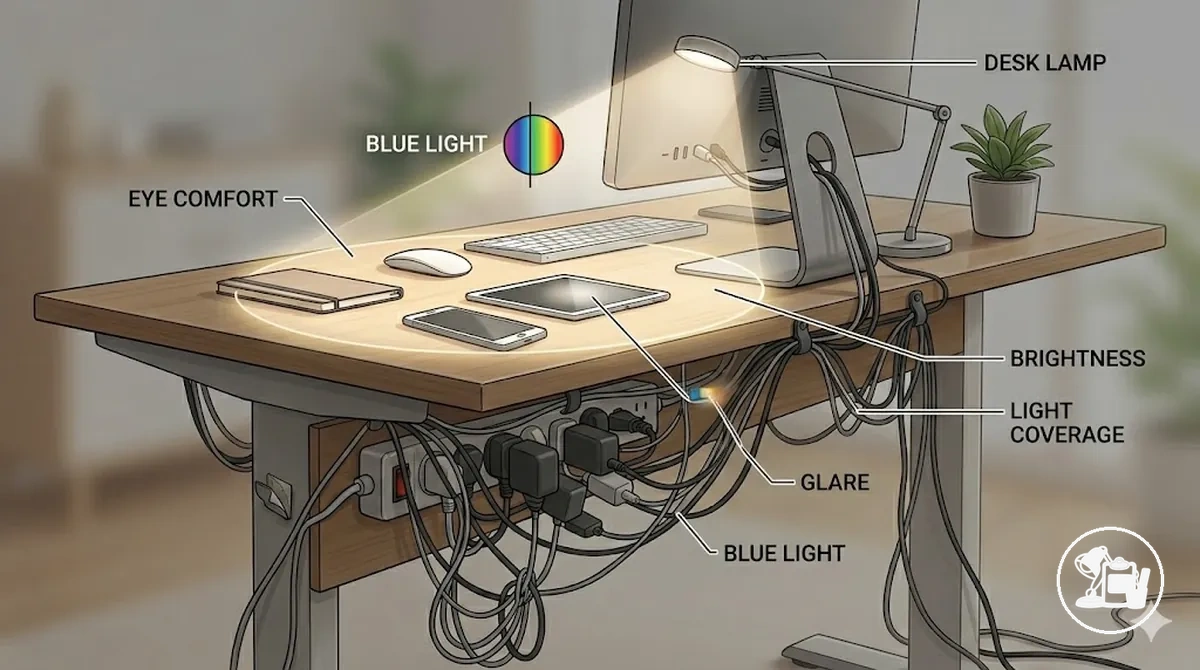
- Brightness: Ensure sufficient light for the study area without creating harsh contrast.
- Glare: Avoid direct light into the eyes or reflective surfaces that can cause discomfort.
- Flicker control: A consistent light output can enhance comfort during extended use.
- Blue light: LED lamp characteristics may influence perceived eye comfort depending on user sensitivity.
- Positioning: Direct light onto the work area while keeping the lamp outside the primary viewing angle.
A poor setup often results in glare or uneven illumination, while a correctly positioned desk lamp may help improve visual clarity and reduce eye strain. For guidance on optimal positioning, see lighting placement in a desk setup, before proceeding to explore additional lighting factors.
Light Quality Factors That Affect Eye Comfort
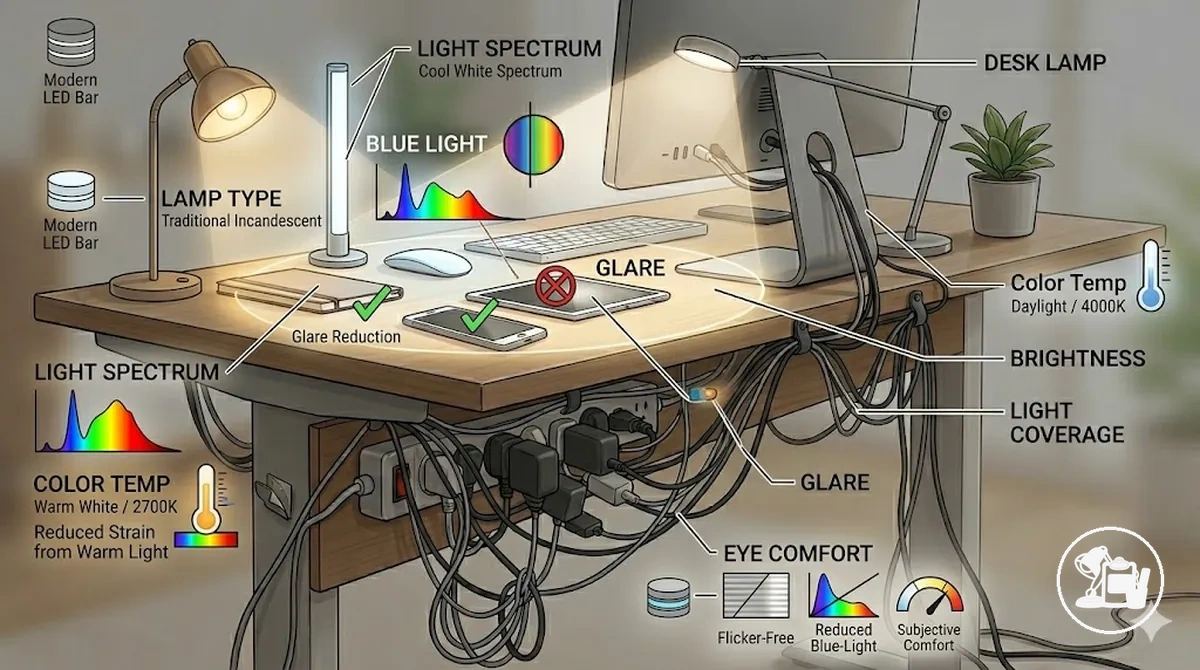
Lamp type directly influences eye comfort by determining the brightness, color temperature, and overall light distribution across the study desk. Understanding these factors can help optimize reading and writing conditions while reducing visual fatigue. Eye comfort varies depending on lamp attributes, making careful selection and positioning important for long-term use.
| Entity | Attribute | Value | Effect |
|---|---|---|---|
| Lamp Type | Brightness | Low / Medium / High | Influences eye strain; medium brightness often supports comfortable reading |
| Lamp Type | Color Temperature | Warm / Cool | Affects reading comfort; warmer tones may reduce visual fatigue |
| Lamp Type | Glare | Direct / Indirect | Direct glare can increase eye discomfort; indirect light reduces strain |
| Lamp Type | Light Spectrum | LED / Fluorescent | Perceived eye comfort varies; LED lamps can provide stable illumination |
For instance, a cool, high-brightness LED lamp placed directly in the line of sight may increase eye strain, whereas adjusting the lamp to provide indirect illumination at moderate brightness can improve visual comfort and reduce fatigue.
Brightness and Dimming Control
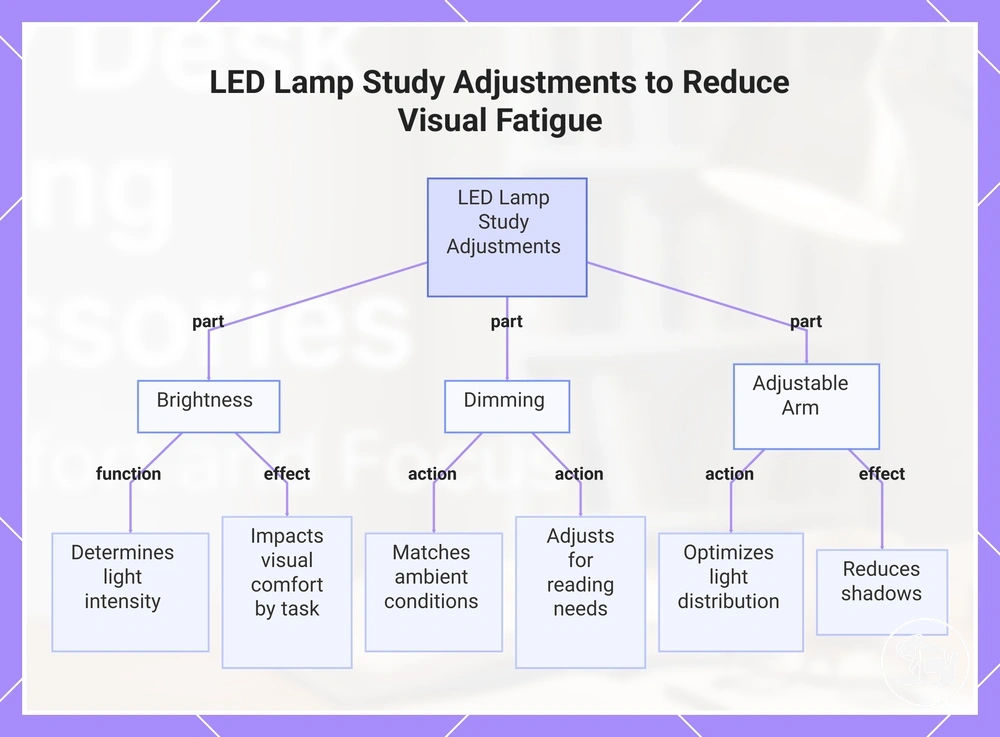
Lamp brightness is an attribute that defines the intensity of light emitted by an LED lamp, while dimming control allows users to adjust this intensity according to their study needs. Attributes like adjustable arm positioning and lamp type can modify how light spreads across the desk and affect eye comfort. Proper coordination of brightness, dimming, and lamp angle can help reduce visual fatigue and improve focus during prolonged study sessions.
- Brightness: Determines light intensity and impacts visual comfort depending on the task.
- Dimming: Enables adjustment of light levels to match ambient conditions or reading needs.
- Adjustable Arm: Allows repositioning of the lamp to optimize light distribution and reduce shadows.
- LED Lamp: Often provides combined features of adjustable brightness and directional lighting for better eye comfort.
This chart shows how brightness, dimming, and adjustable arm work together to support eye comfort during study.
Color Temperature for Reading and Writing
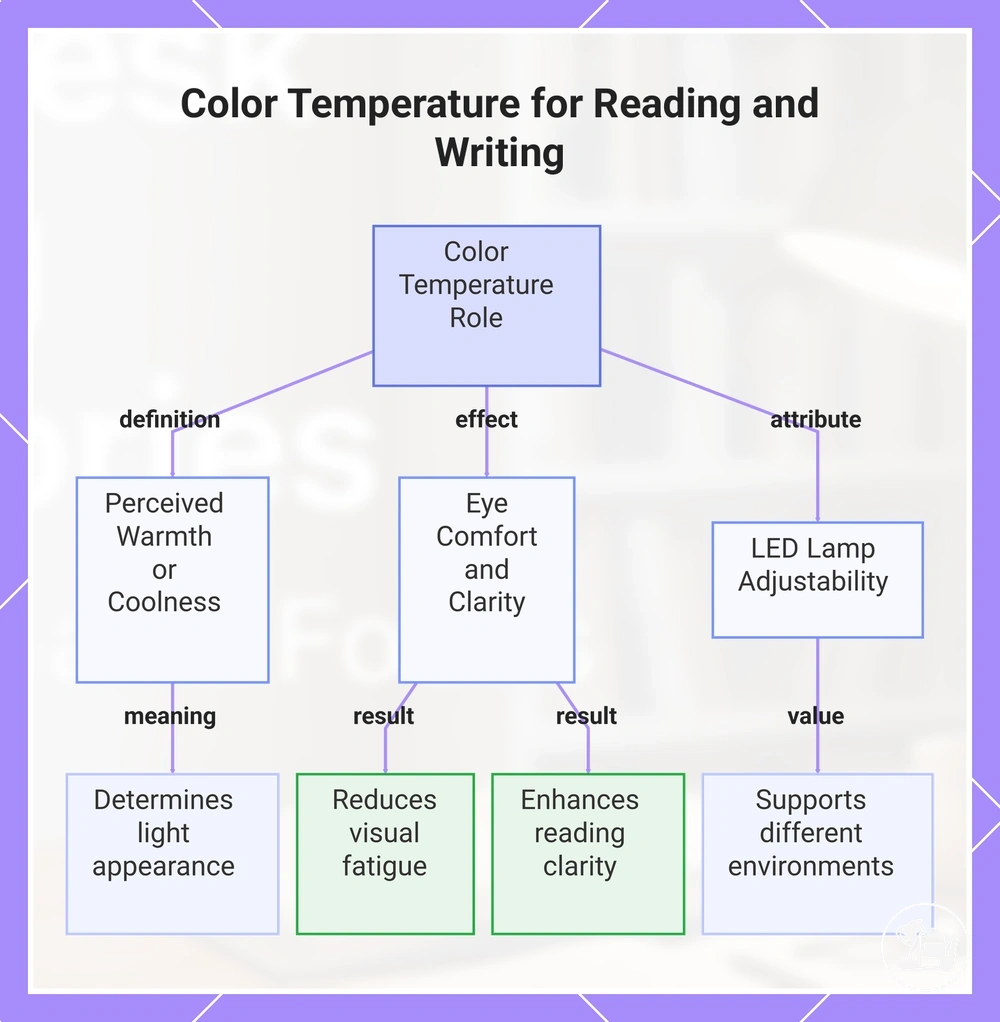
Color temperature refers to the characteristic of a reading light that affects the perceived warmth or coolness of its illumination. In an LED lamp, adjusting color temperature can influence eye comfort and the clarity of text when reading or writing. Selecting an appropriate color temperature may help reduce visual fatigue and enhance reading clarity under various study conditions.
- Color Temperature: Determines whether the light appears warm or cool and can influence eye comfort.
- LED Lamp: Typically offers adjustable color temperature for different reading environments.
- Reading Light: Effectiveness in supporting eye comfort varies with color temperature and task requirements.
This chart explains the definition, effects, and adjustability of color temperature for reading and writing.
Glare, Flicker, and Blue Light Reduction
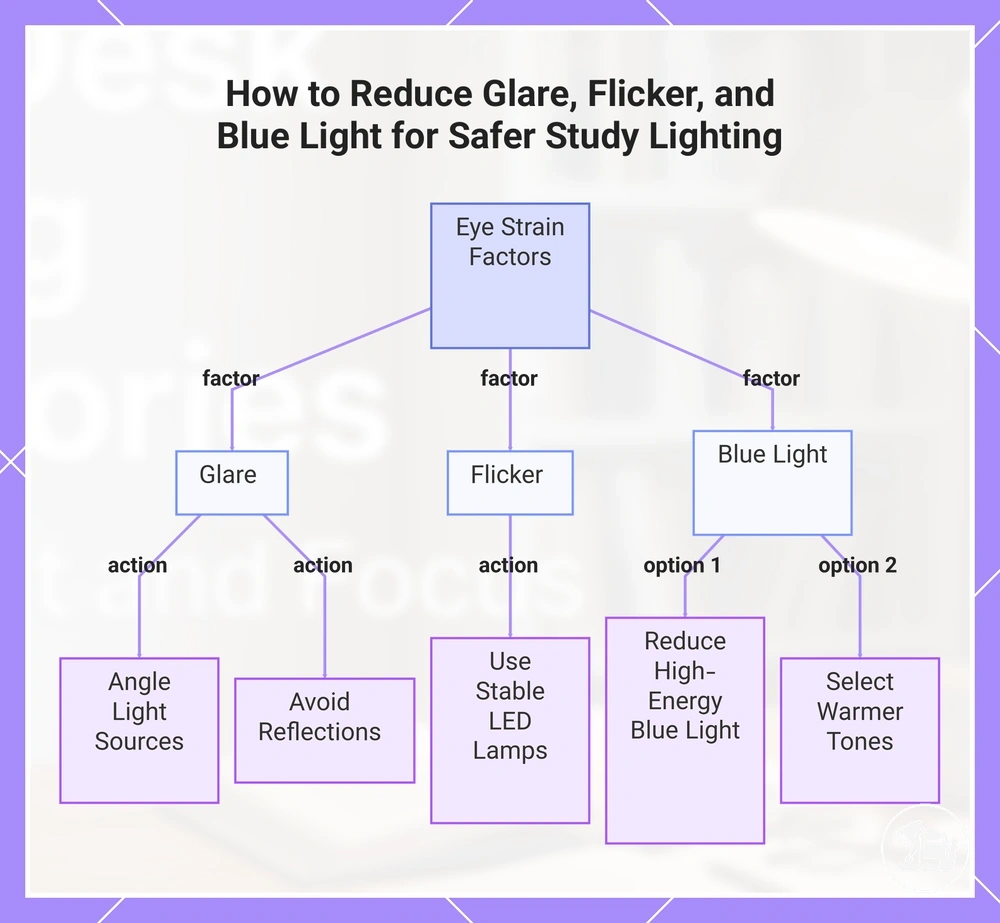
Glare, flicker, and blue light can increase eye strain, and addressing them is important for safer study lighting. Mitigation strategies include positioning lamps to avoid direct glare, using LED lamps with stable light output to reduce flicker, and minimizing exposure to high-energy blue light. Combining these approaches, such as adjusting lamp angles and employing diffused lighting, can enhance eye comfort during reading and writing tasks.
- Glare: Reduce by angling light sources and avoiding reflections on study surfaces.
- Flicker: Use LED lamps with consistent output to prevent fluctuating illumination.
- Blue Light: Lower high-energy blue light exposure or select lamps with warmer tones to ease eye strain.
This chart shows the three main eye strain factors from study lighting and their specific mitigation actions.
Study Desk Lamp Types and Adjustment Features
Lamp type refers to the physical design and mounting style of a study lamp, which affects how light can be positioned across a workspace. Common lamp type options include LED lamp designs, adjustable arm models, and clip-on configurations, each offering different placement and movement characteristics within the study desk setup accessories hub. The suitability of a lamp type may depend on desk layout, available space, and adjustment requirements.
An LED lamp with an adjustable arm may be useful when light needs to be repositioned for different study activities. A clip-on lamp can be a practical option when desk space is limited or when mounting flexibility is preferred. These examples illustrate how lamp type and adjustment features can influence workspace setup without changing the overall study desk arrangement.
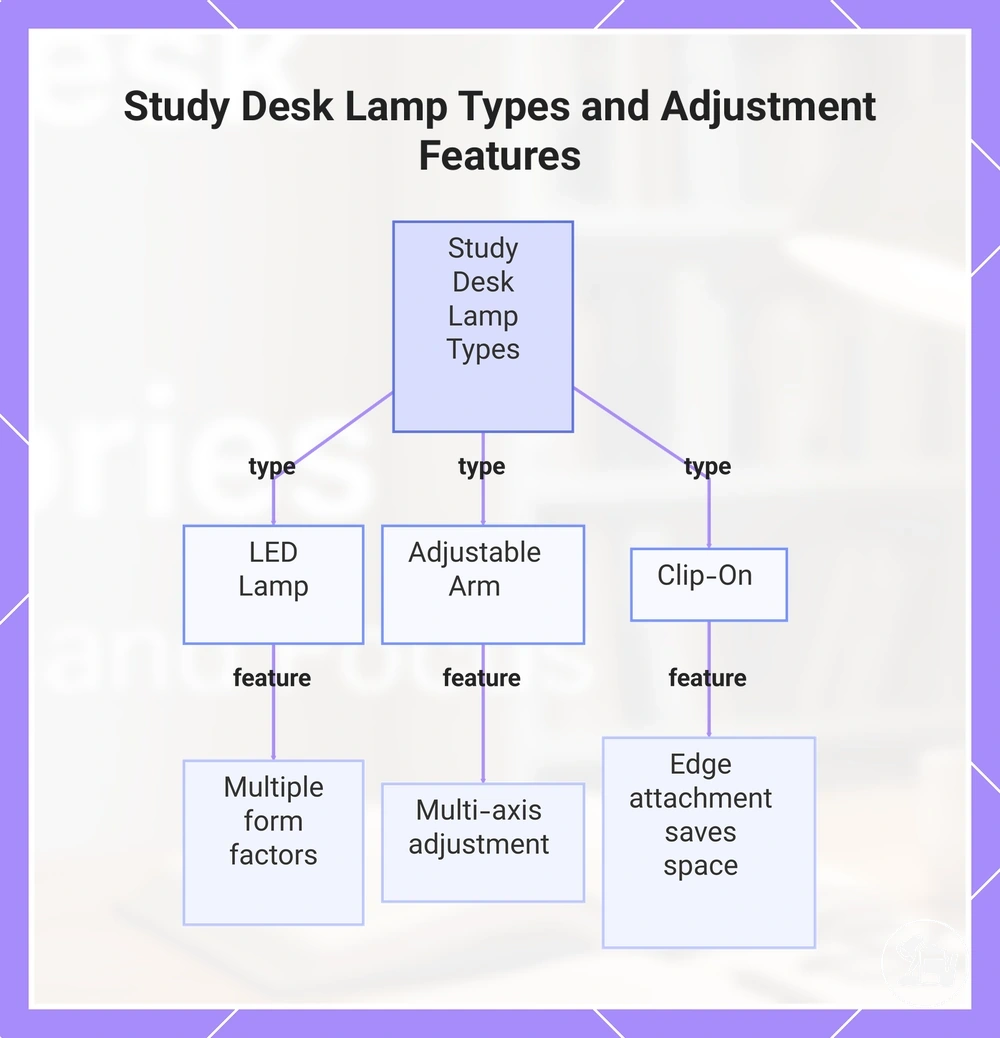
- LED Lamp: Commonly used for study lighting and available in multiple form factors.
- Adjustable Arm: Allows changes to lamp height, reach, and lighting direction.
- Clip-On: Attaches to desk edges, shelves, or similar surfaces to save workspace area.
- Lamp Type: Influences mounting method, positioning flexibility, and adjustment range.
This chart shows the three common types of study desk lamps and their key adjustment features.
LED Desk Lamps for Study Tasks
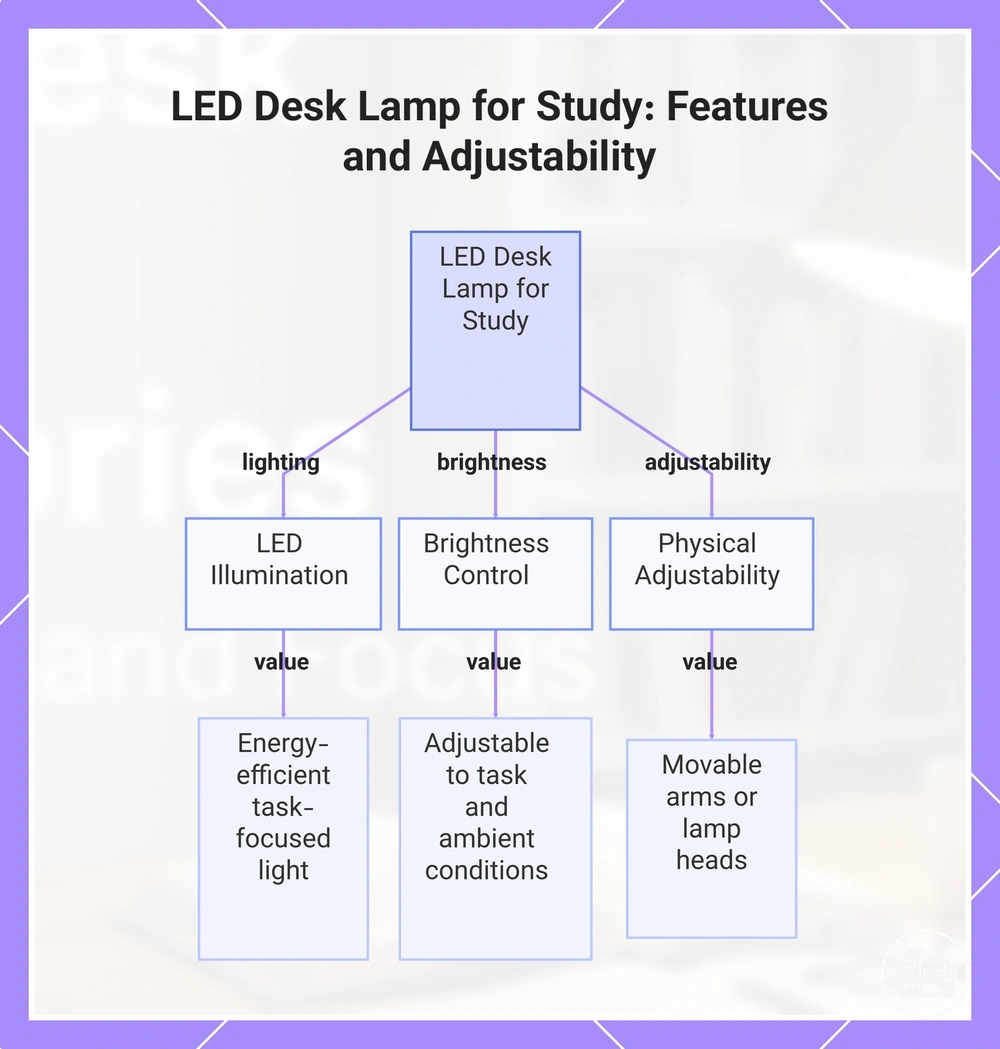
An LED desk lamp provides focused light suitable for various study activities, with features that allow adjustment of brightness and positioning. Adjustability and brightness control in an LED lamp can support reading, writing, or computer tasks depending on desk configuration and user preferences.
- LED Lamp: Provides energy-efficient, task-focused illumination.
- Brightness: Adjustable to suit specific study tasks and ambient conditions.
- Adjustability: May include movable arms or lamp heads to direct light where needed.
This chart shows the main features of an LED desk lamp designed for study tasks, including its energy-efficient lighting, adjustable brightness, and physical adjustability.