Budget Study Desk Accessories for First-Purchase Value
Budget study desk accessories are first-purchase value decisions that focus on useful function before optional extras. Budget study desk accessories should be chosen through a cost-value lens that considers practical usefulness, desk fit, durability, and budget limits rather than appearance alone. This approach helps keep spending aligned with everyday study needs while avoiding unnecessary purchases. The result is a practical decision frame centered on long-term usability within a budget.
This decision frame connects directly to organization, lighting, cable control, surface use, and comfort because these categories support how a study desk functions day to day. Organizers manage clutter, study lamps provide task lighting, and cable control accessories can help reduce wire clutter, while surface and comfort accessories may improve desk fit depending on individual needs. Decorative extras should remain secondary to these core functions.
What Budget Study Desk Accessories Should Solve First
Budget accessories should solve clutter control, usable lighting, cable order, surface protection, and basic comfort before addressing secondary preferences. The priority may vary by desk size, room lighting, clutter source, and study habits, but these issues represent the most common practical needs that affect daily desk use.
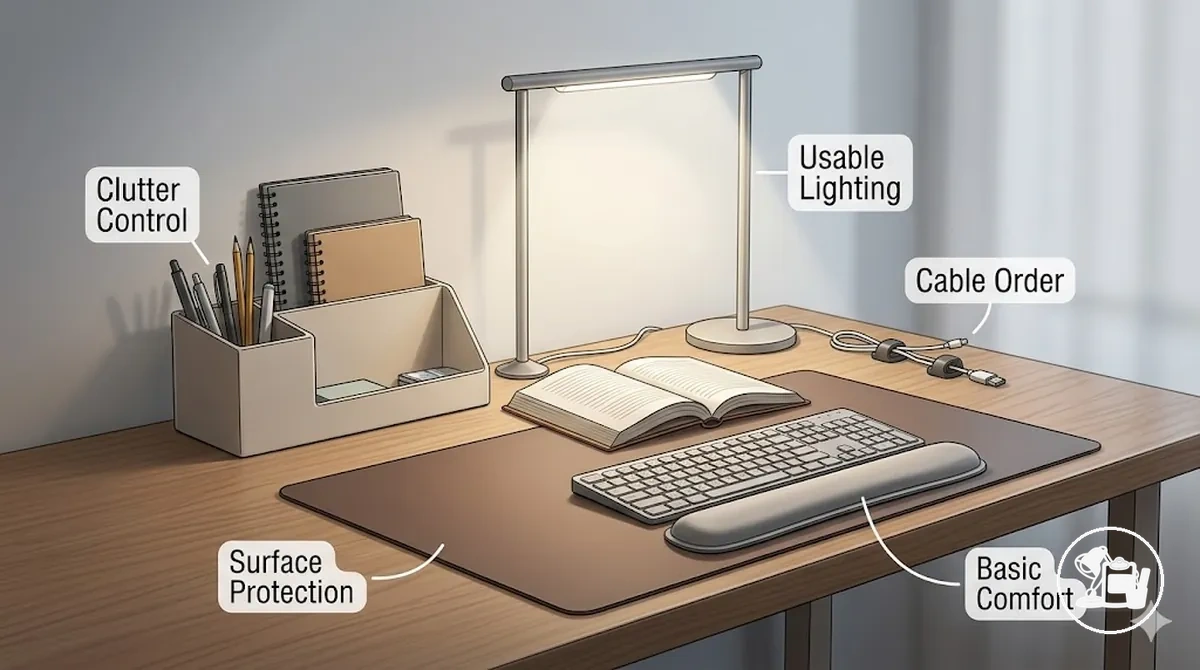
An accessory category creates value when its function addresses a specific condition and improves study desk usability. Organizers keep supplies reachable for clutter control, lamps provide usable lighting for study tasks, cable clips help maintain cable order on the desk surface, and surface protection accessories help reduce wear from regular use. Practical first purchases should generally take priority over decorative extras; for broader context, see the study desk setup accessories hub.
A simple organizer is one example of how a single accessory category can address a specific problem by reducing clutter and improving access to frequently used supplies.
First-Priority Accessories for an Affordable Study Desk Setup
First-priority accessories for an affordable study desk setup are the categories that solve the most noticeable daily desk limitations first. The right starting point depends on practical value, available space, existing conditions, and how often the problem affects study sessions. These first-priority accessories are usually selected by function before appearance.
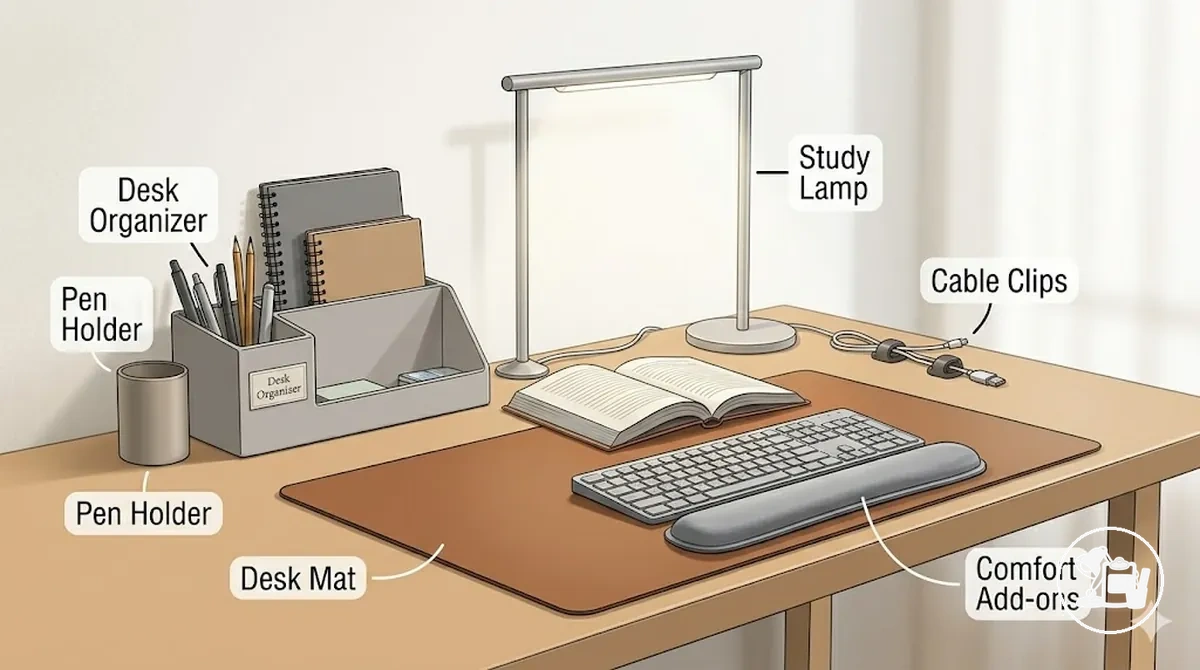
First-Priority Accessories for an Affordable Study Desk Setup should be considered according to cost, function, desk fit, and usefulness conditions rather than a fixed purchase order. If an accessory solves a recurring issue, it may deserve earlier consideration than a mostly decorative item; the first-accessory checklist can support that evaluation.
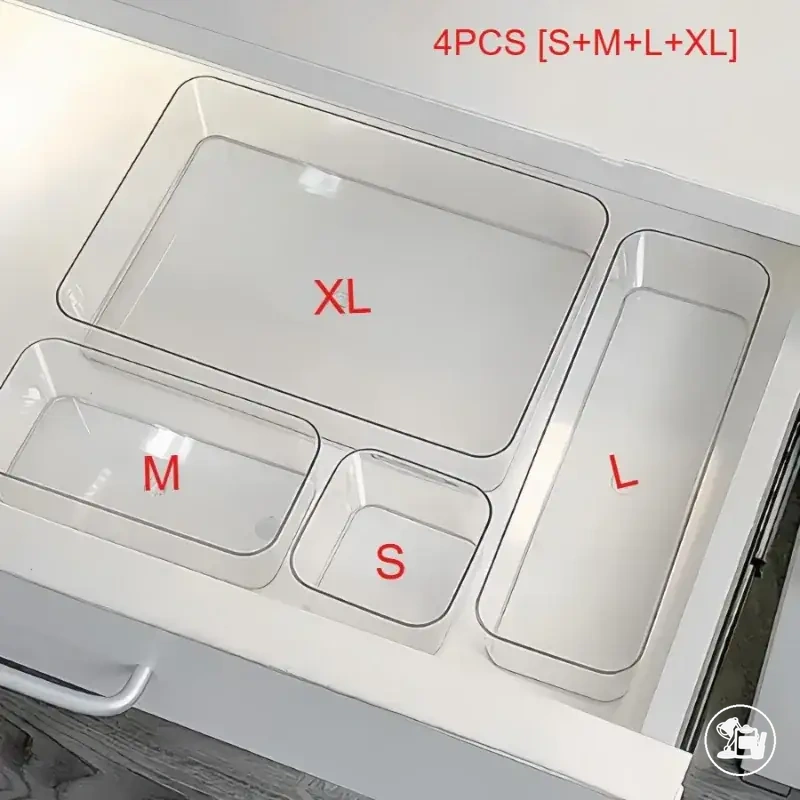
- A desk organizer improves access to supplies and may become a first-priority accessory when clutter regularly affects daily use.
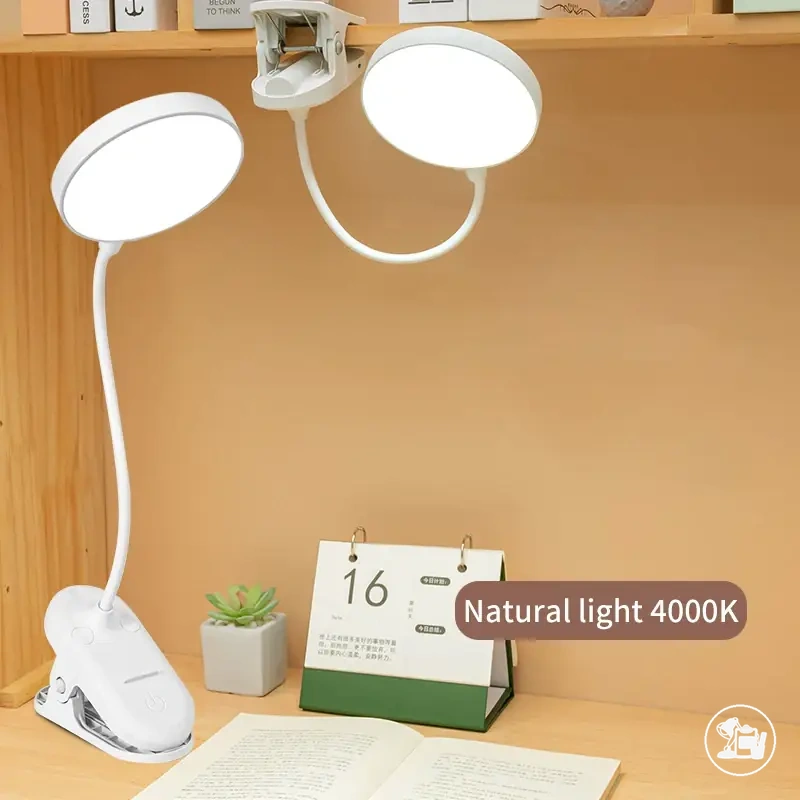
- A study lamp provides task lighting and may deserve early consideration when desk placement or room lighting limits visibility.
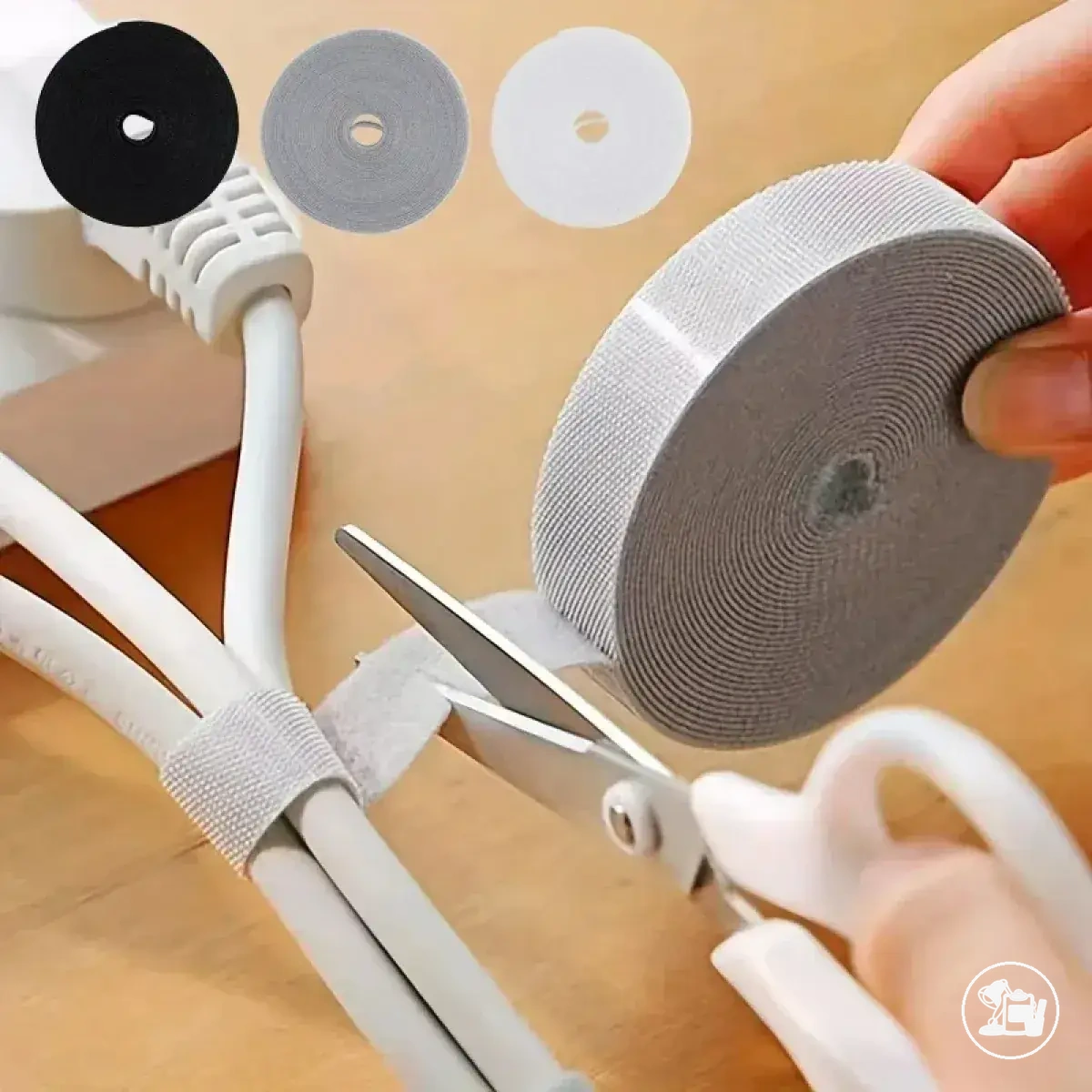
- Cable clips support wire control and can become a practical choice when loose cables reduce usable desk space.
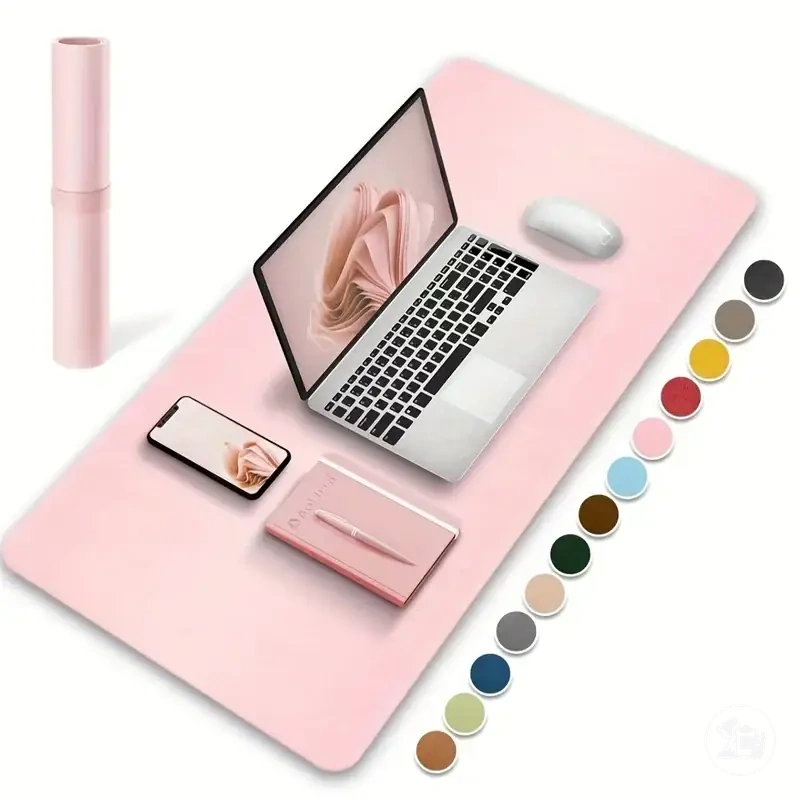
- A desk mat helps define a working area and may be prioritized when surface protection is needed for frequent use.
- A pen holder keeps essential writing tools accessible and can be useful when commonly used items are difficult to reach.
- Comfort add-ons support everyday desk use and may become important when longer study sessions highlight comfort-related needs.
Desk organizers for supplies, papers, and daily clutter
When study items accumulate on a desk, a desk organizer can help reduce visible clutter while keeping supplies and papers within easy reach. Organizer usefulness depends on size, compartments, material, and access pattern, which together determine how effectively daily clutter is managed.
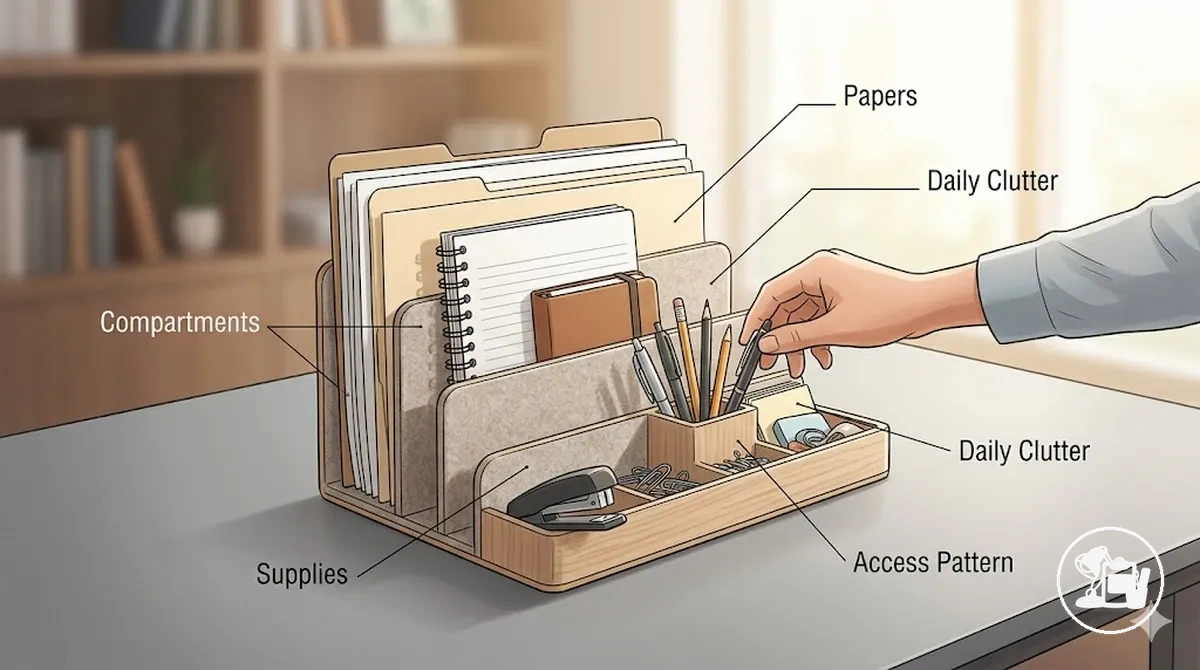
Different organizer formats address specific functions:
- A multi-compartment tray separates papers, notebooks, and stationery, improving access during daily use.
- A vertical file organizer keeps documents upright, saving desk space and enhancing paper visibility.
- A desktop caddy holds pens and smaller items, maintaining reachability without cluttering the surface.
- A modular compartment system allows sections to adjust to varying supply sizes, providing flexible access patterns.
Study lamps for usable lighting on a limited budget
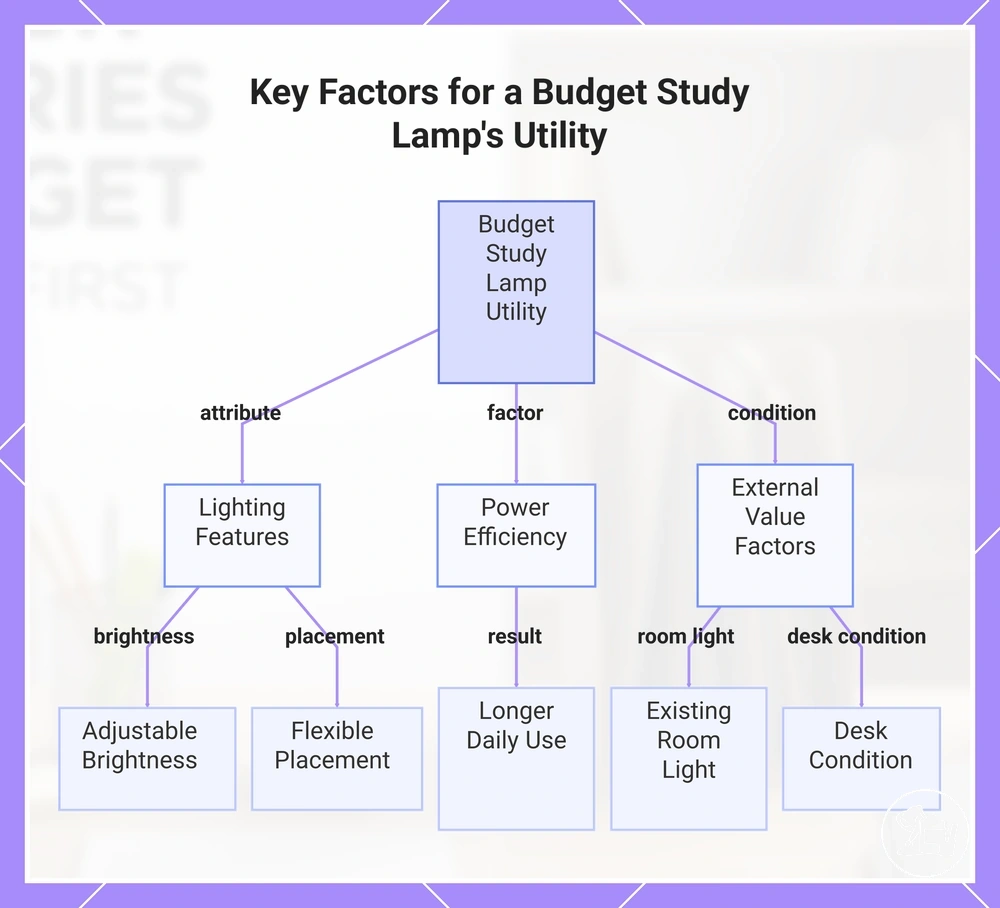
When room lighting is insufficient on a study desk, a study lamp can provide focused light for reading and writing. A budget lamp's usefulness depends on brightness, adjustability, placement, and power use, with its value influenced by the existing room light and desk condition.
For example, a lamp with adjustable brightness can accommodate different study tasks, while flexible placement helps reduce shadows on the desk surface. Power-efficient designs may also support longer daily use without increasing energy consumption significantly.
This chart outlines the main attributes and external conditions that determine a budget study lamp's usefulness for focused task lighting.
Cable clips, holders, and low-cost wire control
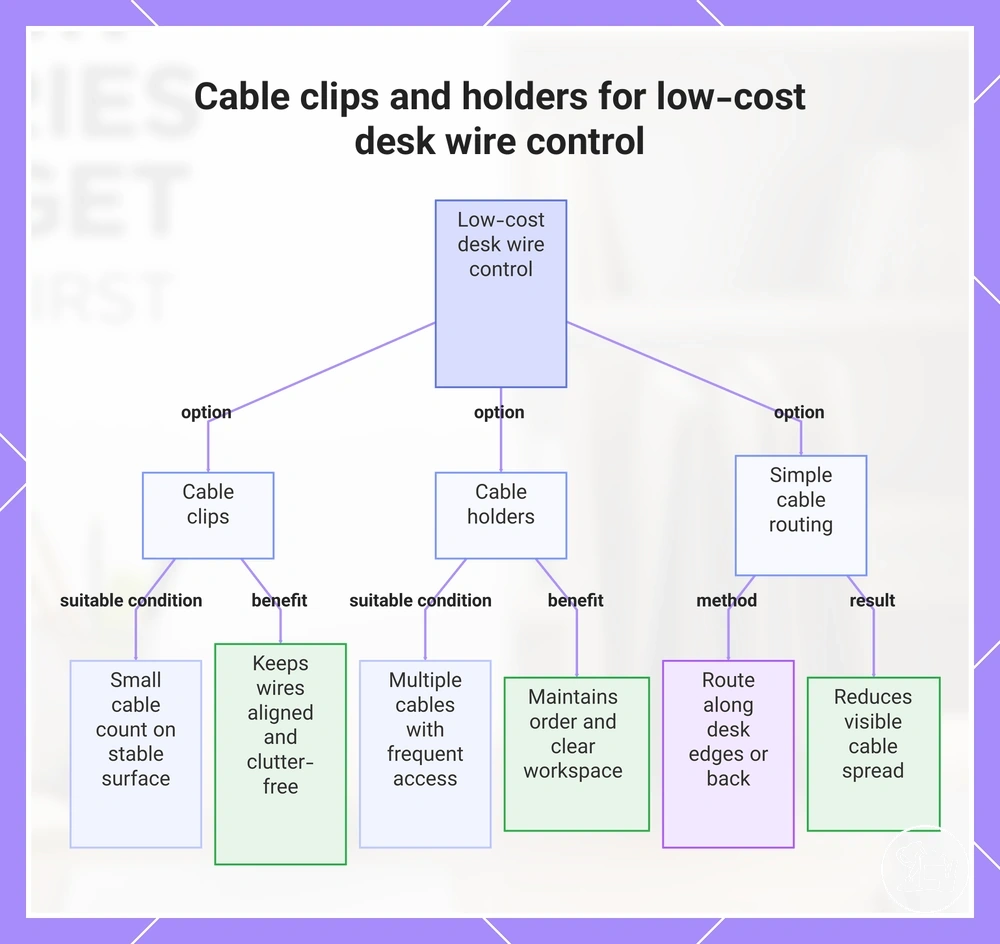
When cables and wires occupy the study surface, cable clips and holders can prevent them from spreading across the desk. Low-cost wire control effectiveness depends on cable count, attachment surface, and removability, which together determine how much clutter is reduced.
- Cable clips are suitable for managing a small number of cables on a stable surface, keeping wires aligned and preventing surface clutter.
- Cable holders accommodate multiple cables that require frequent access and can maintain order while keeping the workspace clear.
- Simple routing choices allow cables to follow the edges or back of the desk, reducing visible spread without complex installation.
This chart compares cable clips, cable holders, and simple routing as low-cost solutions for managing desk cable clutter.
Desk mats, pen holders, and small surface essentials
When frequently used items accumulate on a study desk, small surface accessories can help maintain a stable and organized workspace. Desk mats protect the surface area, improve grip, and allow easier cleaning, while pen holders keep frequent-use items accessible for daily tasks.
Practical surface essentials focus on stability and accessibility rather than decoration. For example, a desk mat can define a writing area, and a pen holder ensures pens are within reach, whereas decorative extras provide limited functional benefit for daily use.
Basic comfort add-ons that stay within budget
When longer study sessions make wrist contact, foot placement, or sitting position less comfortable, comfort add-ons may become useful within a limited budget. Comfort add-ons provide posture support through conditional factors such as desk height, chair setup, usage duration, and space fit, so their value depends on the study environment and daily use needs.
- Wrist rest can support wrist contact when desk height or keyboard position places pressure on the hands during typing or writing.
- Footrest may improve foot placement when the sitting position leaves feet without stable support on the floor.
- Compact support items can provide additional posture support when space fit allows and the desk setup benefits from extra comfort accessories.
How to Judge Cheap Desk Accessories Before Buying
Judging cheap desk accessories before buying depends on clear evaluation criteria that include function, durability, fit, material quality, return value, and whether the accessory addresses a real desk problem. Price alone does not determine usefulness because suitability varies by desk context, usage frequency, and accessory type. These judging criteria provide a structured way to assess budget accessories before purchase.
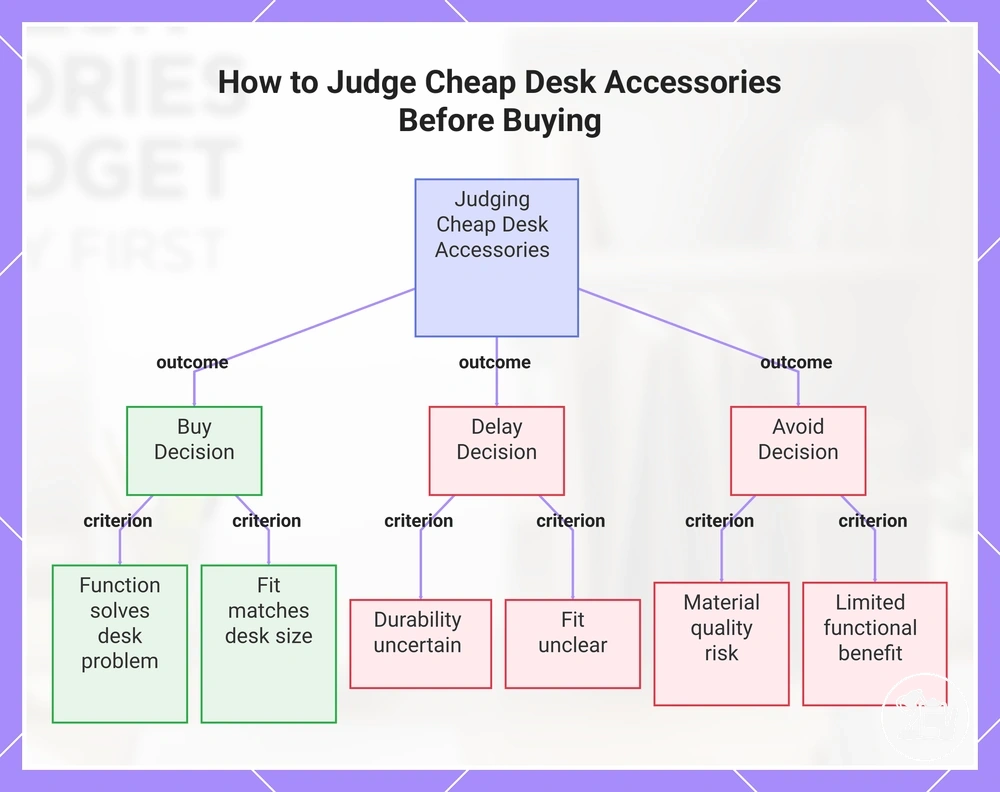
To apply these criteria effectively, the following mini-checklist verifies each accessory's practicality and alignment with your study desk needs. For more detailed guidance, see buying checks for value. The checklist uses an accessory → criterion → acceptable condition → buy, delay, or avoid approach.
- Accessory → Function: If the accessory solves a specific desk problem and supports frequent tasks, mark a buy decision.
- Accessory → Durability: If material stability meets expected usage, assign a buy decision; if durability is uncertain, consider a delay decision.
- Accessory → Fit: If the accessory fits desk size, placement, and intended use, assign a buy decision; if space or fit is unclear, consider a delay decision.
- Accessory → Material Quality: If material quality may create risk of instability or short service life, assign an avoid decision.
- Accessory → Return Value: If the accessory provides limited functional benefit, consider a delay decision or avoid decision.
This chart shows the three main purchase decisions (buy, delay, avoid) based on key evaluation criteria for cheap desk accessories.
Function before aesthetics
Function should lead when choosing a budget accessory because practical usefulness directly affects how the desk setup performs. A budget accessory offers the most value when its functional attribute aligns with a specific desk condition, while aesthetics can matter only after core functional needs are met. Prioritizing function ensures the decision effect favors usability, with appearance considered secondary for style preference.
Durability, fit, and desk space checks
Durability, fit, and desk space checks determine whether a cheap accessory suits the intended desk setup and usage pattern. Checking material strength, dimensions, stability, and placement limits helps prevent poor fit, unstable positioning, and purchases that may not match available desk space.
- Material strength: If material strength and build quality appear suitable for the expected usage pattern, the accessory may present a lower durability risk; otherwise, the decision may require additional review.
- Dimensions: If accessory dimensions fit the available desk space and intended placement, the fit outcome is more likely to support regular use; if size limits workspace, reconsider the purchase decision.
- Stability: If the accessory remains stable under the expected desk condition, it may be more suitable for daily use; if stability appears uncertain, verify before deciding.
- Placement limits: If placement limits align with desk size and layout, the accessory may integrate more effectively; if placement restricts normal use, the outcome may offer less practical value.
Low-Cost Organization Ideas That Reduce Clutter
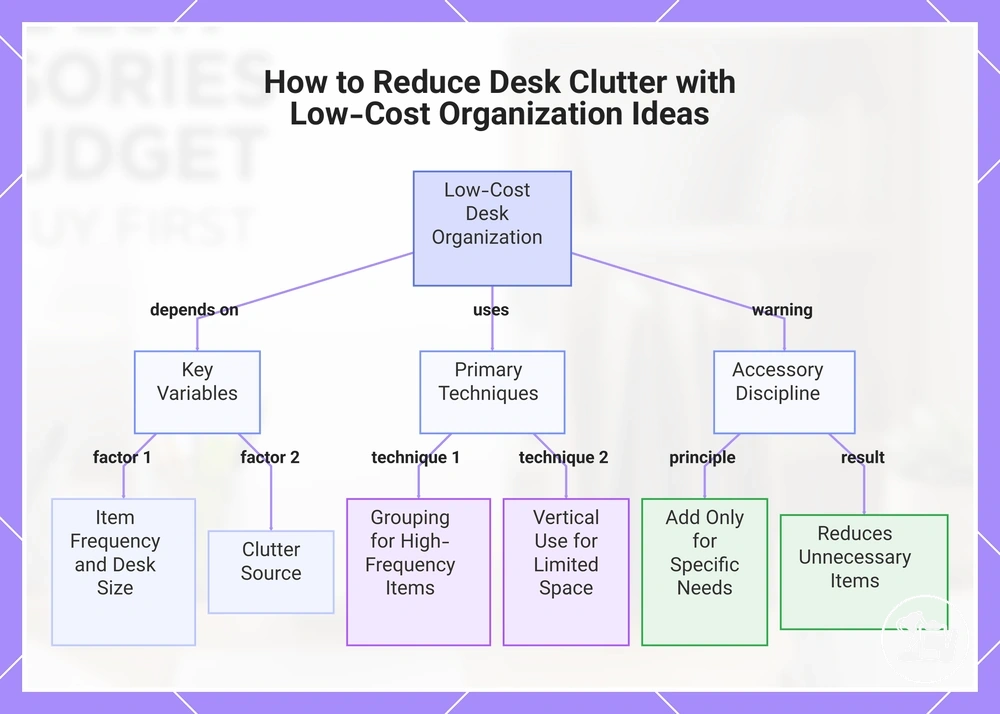
Reducing clutter through low-cost organization depends on placing budget accessories where they support daily use rather than adding more storage than necessary. The effectiveness of low-cost organization can vary by item frequency, desk size, and clutter source, but simple placement habits often improve access and workspace order. These factors form the main organization variables that influence desk organization decisions.
Grouping, vertical use, cable routing, and surface zoning can reduce clutter under budget limits when applied to the specific source of desk disorder. Each technique works best when matched to how often items are used and how much space is available.
- Grouping: Place related items together when item frequency is high to improve access and reduce scattered clutter across the desk surface.
- Vertical use: Use vertical storage when desk size limits surface space, helping move less-used items away from the main work area.
- Cable routing: Guide wires along desk edges or designated paths when cables contribute to the clutter source, improving wire control and visual order.
- Surface zoning: Assign separate areas for daily items when multiple activities share the same desk, helping maintain a clearer workflow.
- Budget accessory use: Add organizers, trays, or holders only when they support a specific organization need, reducing unnecessary items on the desk.
To keep low-cost organization focused on practical usefulness rather than adding accessories without purpose, see useful versus unnecessary choices.
This chart shows the key variables influencing low-cost desk organization, the primary techniques matched to those conditions, and a warning about accessory use.
Budget Trade-Offs Between Minimal, Stylish, and Fully Equipped Setups
Budget setup styles are trade-offs rather than fixed quality levels because each approach balances accessory burden, practical benefit, clutter risk, and upgrade flexibility differently. A minimal setup, stylish setup, and fully equipped setup can all support study needs, but the right choice depends on budget, desk size, daily tasks, and willingness to accept a compromise. These setup styles should be viewed as trade-offs rather than ranked options.
The comparison below organizes cost-related considerations, usefulness, clutter risk, and upgrade flexibility across common setup styles. No setup style is universally best because desk size, budget limits, and daily usage patterns can change the decision.
| Setup style | Accessory burden | Practical benefit | Main trade-off | Best-fit condition |
|---|---|---|---|---|
| Minimal setup | Fewer items | Supports essential tasks with lower clutter | May offer less flexibility for changing needs | When desk space is limited or a lower-cost approach is preferred |
| Stylish setup | Moderate accessory burden | Balances appearance with practical value | Visual additions may increase clutter risk if not selected carefully | When appearance matters but daily function remains important |
| Fully equipped setup | Higher accessory burden | Provides broader functionality and convenience | Can increase clutter risk and reduce open desk space | When desk size and budget allow additional accessories that support regular tasks |
The final decision depends on which compromise aligns most closely with available budget, clutter tolerance, and upgrade flexibility needs.
Accessories to Delay When the Budget Is Limited
Accessories to delay are items that provide convenience, aesthetics, or secondary comfort, which can usually wait when the budget is limited. Cost-value decisions prioritize necessary purchases first, while delayable upgrades are conditional rather than unnecessary. These accessories can become useful if desk size, study routine, or comfort needs change.
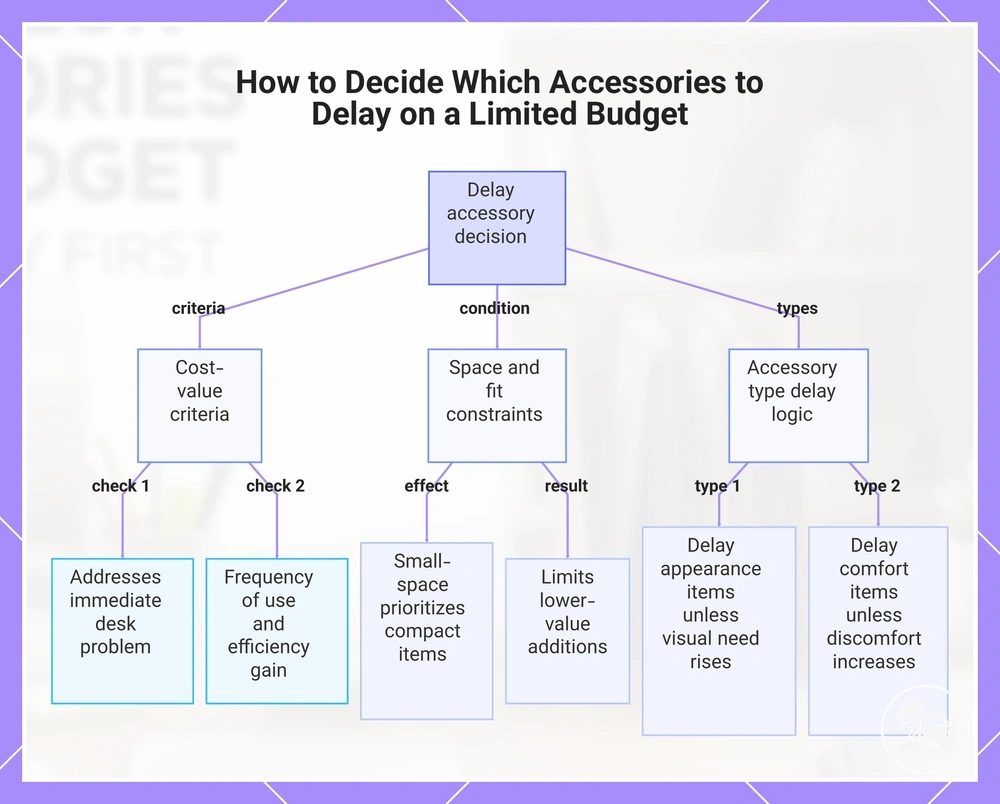
Cost-value criteria for delaying accessories focus on whether the item addresses an immediate desk problem, its frequency of use, and its contribution to workspace efficiency. The goal is to separate necessary purchases from lower-priority upgrades that can wait without significantly affecting daily use.
- Accessory → Reason to delay: Appearance-focused items; Condition that changes priority: Visual importance increases; Decision impact: Upgrade later if practical value remains limited.
- Accessory → Reason to delay: Secondary comfort accessories; Condition that changes priority: Longer study sessions or increased discomfort; Decision impact: Reassess when comfort becomes critical.
- Accessory → Reason to delay: Extra organization tools; Condition that changes priority: Clutter becomes harder to manage; Decision impact: Consider acquisition once workspace management becomes challenging.
- Accessory → Reason to delay: Convenience items; Condition that changes priority: Routine changes increase need; Decision impact: Upgrade later when it supports repeated tasks.
Desk fit and space limitations also influence which accessories can wait. If space is constrained, small-space accessory choices may be prioritized over lower-value additions. Accessories to delay should be evaluated based on current utility, not just potential future benefit. Product examples can assist in comparison and price-check decisions, but the postpone-versus-buy-now choice should remain grounded in present needs and budget constraints【message_idx†source】.
This chart shows the three main factors for deciding which accessories to postpone: cost-value criteria, space constraints, and accessory type-based delay logic.
Here are product examples that may make comparison easier. Before buying, always review the compatibility criteria, essential features, and product details.