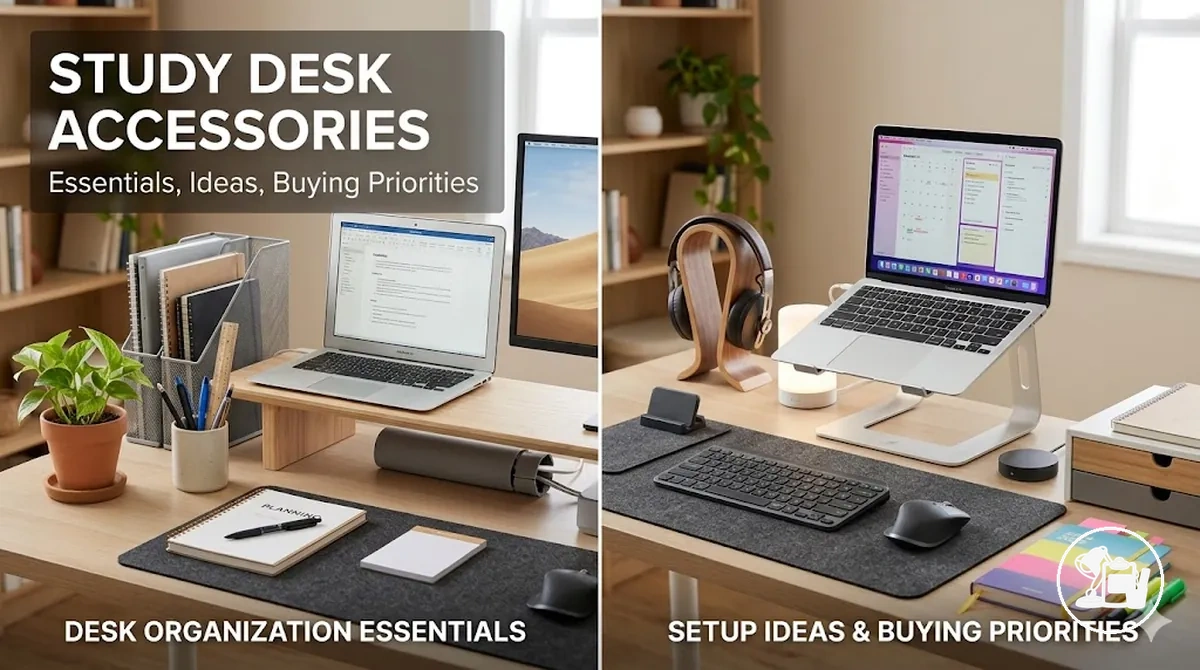
Study Desk Setup Accessories Overview
Study desk setup accessories are items that support organization, lighting, storage, cable control, and comfort within a study environment. They help create a functional workspace tailored to the user’s desk size, study habits, and clutter level. This overview serves as a decision-support guide for understanding and prioritizing accessories before evaluating specific options.
When desks become cluttered or lack proper lighting and cable management, workspace accessories can help improve usability if they are chosen according to the context. Functional accessories focus on practical support, while decorative-only items may not enhance study efficiency. Fit, available space, and individual study habits determine which accessories contribute most effectively to organization and comfort.
Accessories should be assessed based on their intended function rather than appearance or popularity. Considering category groups such as organization tools, lighting, storage, comfort items, and cable management can clarify buying priorities and guide readers toward informed selection decisions without product pressure.
Grounding Study Desk Accessories: Scope and Basics
Study desk accessories are supporting items that improve a desk's organization, usability, comfort, lighting, storage, and cable control. These items provide practical support for a functional and accessible workspace, helping users maintain an efficient study environment.
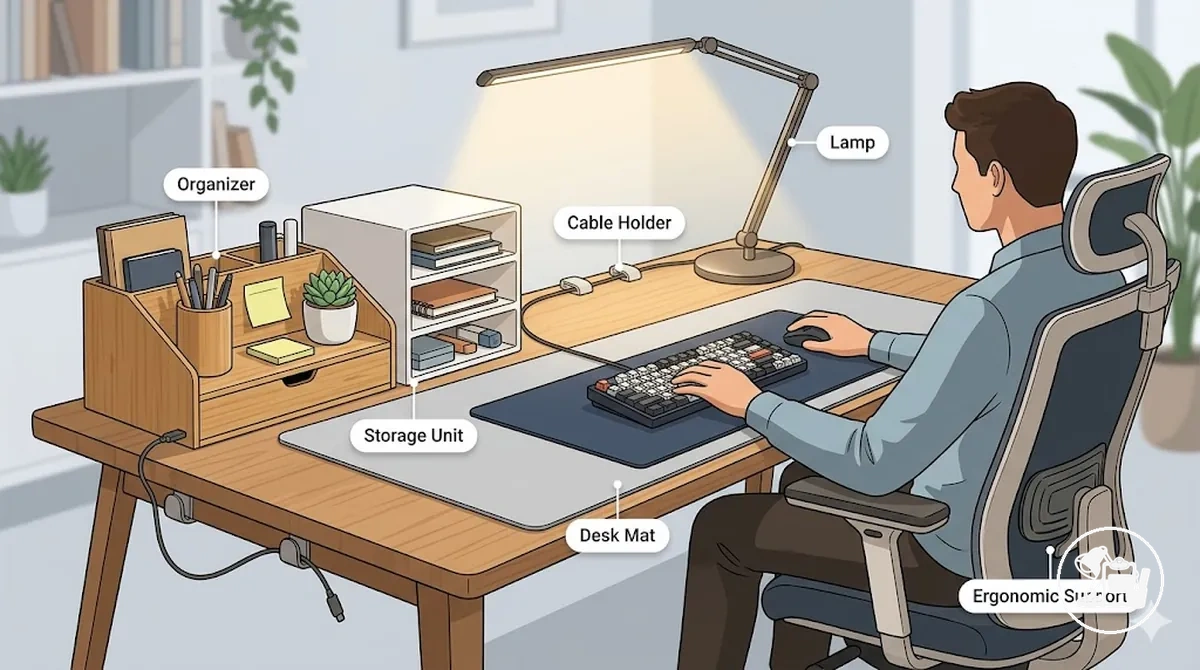
The main types of study desk accessories include organizers, lamps, cable holders, desk mats, storage units, and ergonomic supports. Each of these items serves a practical purpose, and understanding what study desk accessories include can guide prioritization for effective desk setup :contentReference[oaicite:0]{index=0}.
Decorative items can be included only when they support functionality without reducing usable desk space or interfering with focus. Items intended solely for visual appeal should not compromise organization, comfort, or access to essential study tools.
Major Categories and Attributes of Study Desk Accessories
Study desk accessories are organized into main accessory categories, each linked to a specific function and practical attribute that addresses common desk challenges. Understanding these categories helps structure a functional study workspace efficiently.
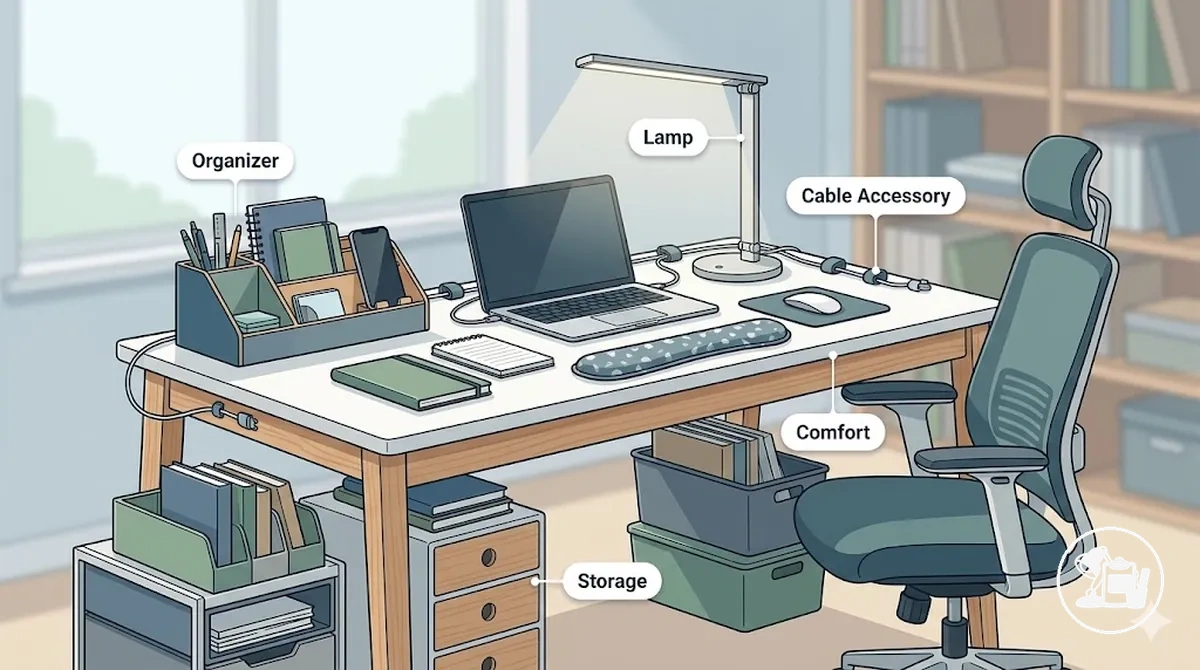
Functional scenarios such as cluttered surfaces, poor lighting, or tangled cables are addressed by different accessory categories. The table below organizes these categories, highlighting how each attribute contributes to resolving a desk problem.
| Accessory category | Key attribute | Typical examples | Desk problem it helps solve |
|---|---|---|---|
| Organization | Compartment layout | Organizer, tray, pen holder | Clutter reduction and easier access |
| Lighting | Adjustability | Lamp, reading light | Enhanced visibility and reading comfort |
| Cable accessory | Routing | Cable clips, cable sleeve | Wires kept organized and clean |
| Storage | Capacity and accessibility | Drawer, storage box, shelf | Extra space for study materials |
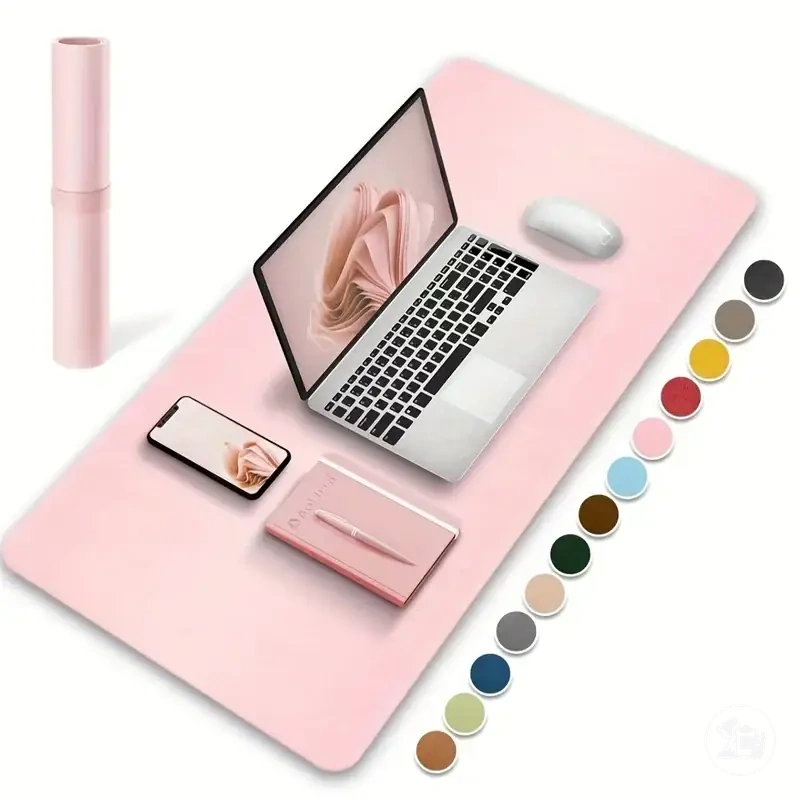
| Comfort | Ergonomic support | Desk mat, wrist support | Improved desk usability and comfort |
This EAV perspective links category (entity) to key attribute and outcome, clarifying essential accessory functions without turning the section into a catalog-style review :contentReference[oaicite:0]{index=0}.
Focus on functional impact rather than product details; individual items illustrate how attributes resolve common desk issues rather than ranking or recommending specific products.
Selection Logic and Buying Priorities
Buying priorities for study desk accessories depend on identifying the desk's weakest current function. Accessories should be selected according to need, fit, function, and value rather than a fixed buying order. Desk size, existing accessories, and study habits influence which improvement deserves attention first.
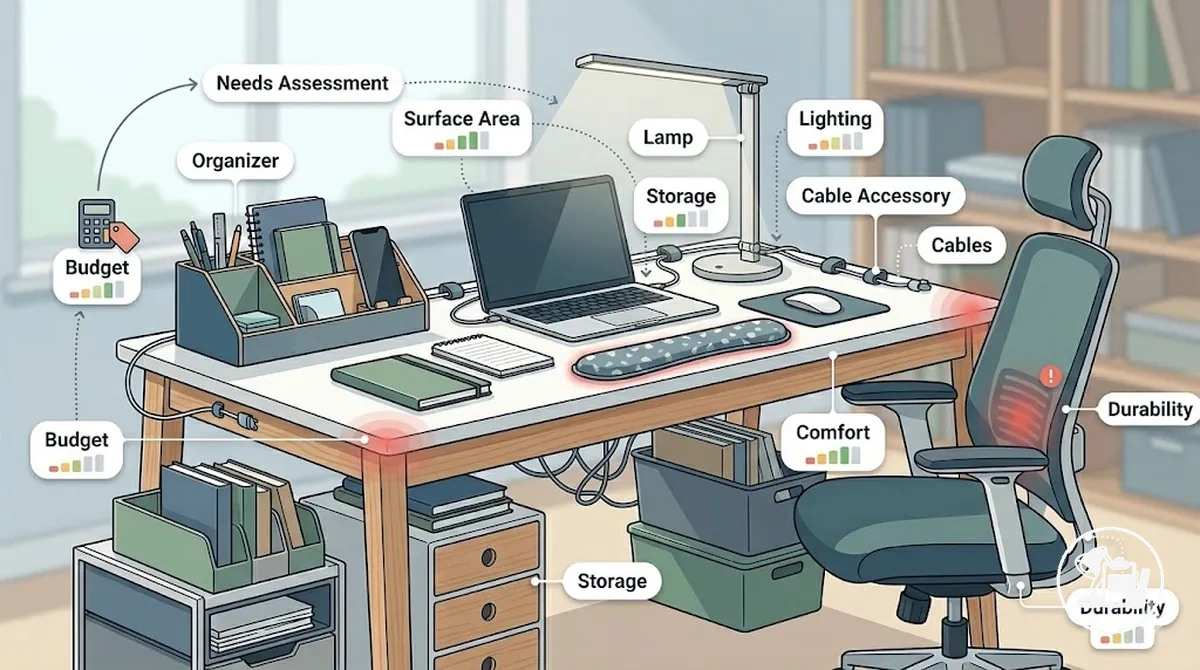
For a small desk, space-saving items may deserve higher priority because surface area is limited. For a cluttered desk, organization and cable control may provide greater benefit. Low-light desks often benefit from improved lighting conditions, while budget-limited setups may focus on essential functions before additional upgrades. Use the following study desk accessories checklist to evaluate current needs.
- Available surface area and accessory footprint
- Study duration and daily workspace use
- Lighting conditions for reading and writing tasks
- Storage gaps that reduce accessibility
- Cable count and wire management requirements
- Comfort needs during extended study sessions
- Durability relative to expected usage
- Budget and overall value for the intended function
Selection logic works best when each criterion is connected to a specific need. A storage accessory addresses storage gaps, a lighting accessory addresses visibility concerns, and an organizer supports clutter reduction. Fit depends on available workspace, while value depends on how effectively the accessory supports the intended function.
A common myth is that every desk follows the same buying order. In practice, buying priorities vary by desk condition and user requirements. Review practical buying checks before buying study desk accessories to improve decision confidence and evaluate the next purchase logically.
Organizational Accessories for a Tidy Desk
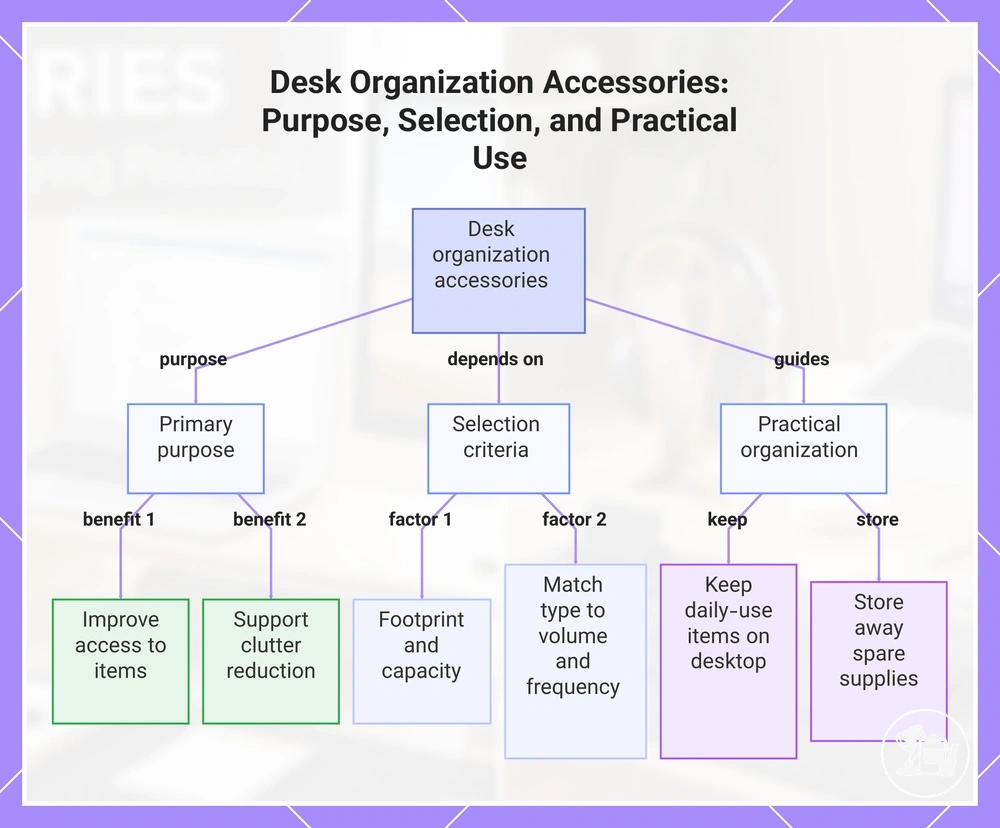
Organization accessories help reduce clutter by giving frequently used study items dedicated locations. When pens, notes, and supplies remain organized and accessible, study tasks can flow more smoothly. Their primary purpose is to improve access while supporting clutter reduction.
When desktop space is limited, organizer selection depends on footprint, capacity, compartments, and accessibility. Smaller desktop organizers can keep essential items within reach, while shelves may help move lower-priority items away from the main workspace. Common organization accessories include:
- Trays: Keep loose papers, sticky notes, and small supplies accessible.
- Pen holders: Keep writing tools organized within a compact footprint.
- Dividers: Create compartments for notebooks, folders, and documents.
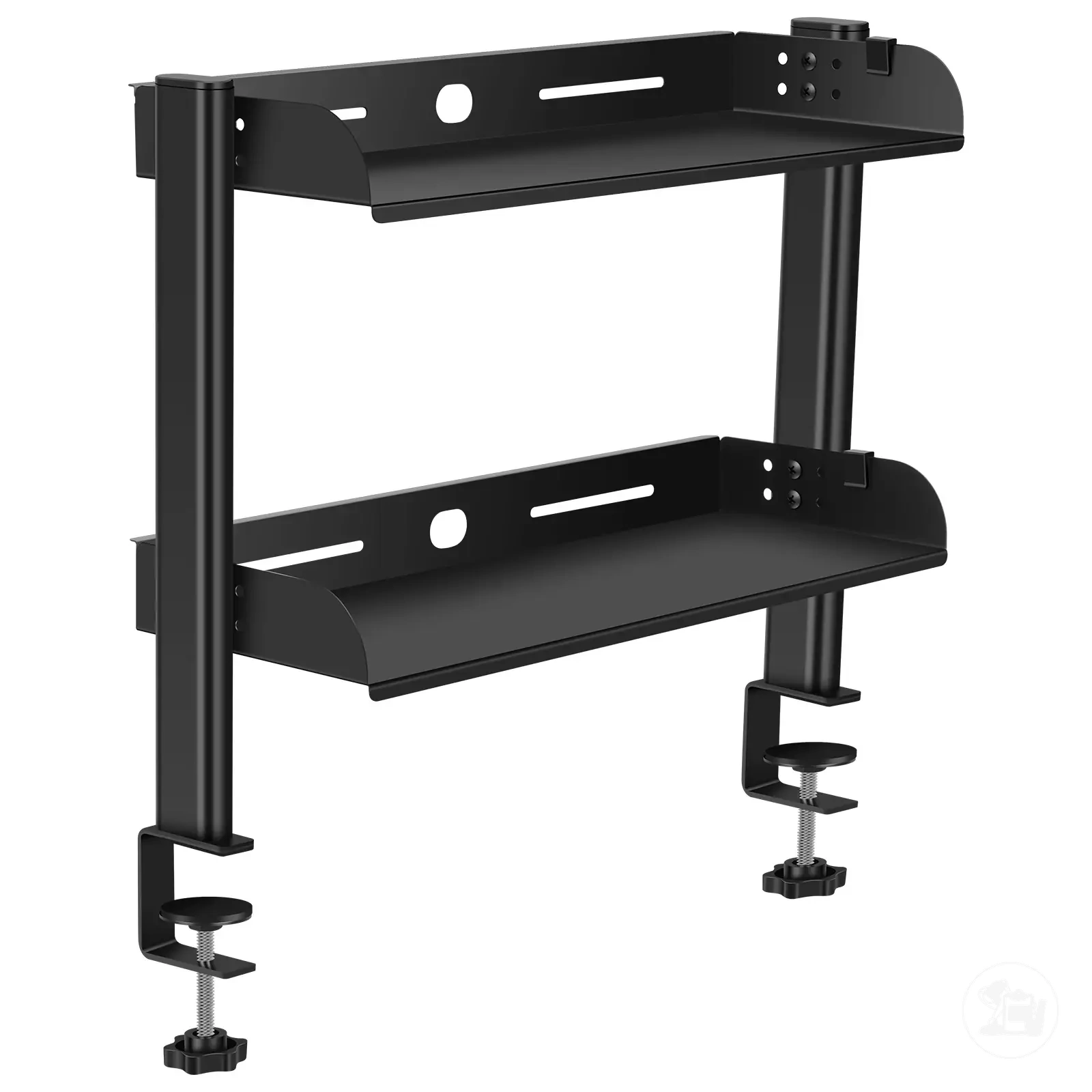
- Shelves: Support organization beyond the immediate desktop area.
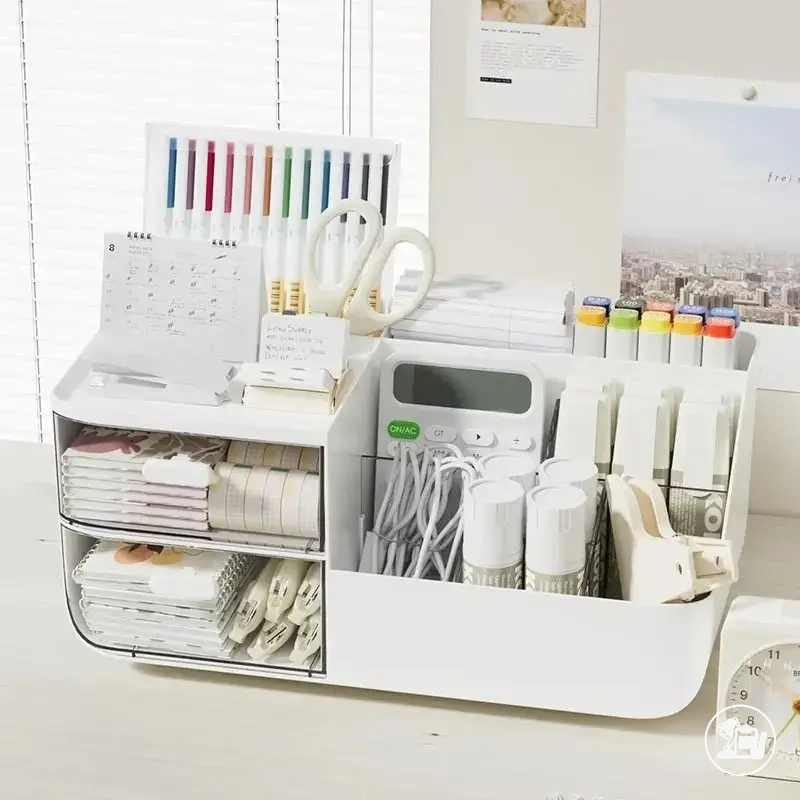
- Desk organizers: Combine compartments for stationery and frequently used study items.
Organization accessories work best when organizer type matches item volume, access frequency, and available desktop space. Capacity, compartment layout, footprint, and accessibility influence clutter-control outcomes, which is why many desk organization accessories focus on keeping frequently used items visible and reachable. The contrast below can help separate desktop essentials from items that may be stored away when space is limited.
- Keep on desktop: Daily-use pens, notebooks, sticky notes, and reference materials.
- Store away: Spare supplies, archived documents, and less frequently used items.
This chart shows the purpose of desk organization accessories, key selection factors, and practical guidelines for keeping a tidy desk.
Lighting and Ergonomic Accessories for Comfort and Focus
Lighting and ergonomic accessories support comfort, visibility, and focus during study sessions. Adjustable lamps with brightness control and glare direction, along with wrist supports, stable mats, and seating adjustments, improve study conditions without guaranteeing specific health outcomes.
In scenarios such as night study, laptop-based work, or small shared desks, proper lamp positioning and desk comfort accessories help maintain focus while adapting to space and lighting constraints. A comparison of needs clarifies selection priorities:
| Lighting need | Comfort / ergonomic need |
|---|---|
| Brightness control for reading | Wrist support for typing |
| Glare direction adjustment | Desk mat stability |
| Adjustable lamp angle and stand height | Seating alignment and comfort |
It is a misconception that a single lamp or accessory setup ensures optimal comfort and focus. In practice, outcomes depend on desk layout, session duration, and user habits. Using lighting and ergonomic accessories thoughtfully may help improve comfort and visibility in diverse study conditions, providing safer and more focused work sessions :contentReference[oaicite:0]{index=0}.
Cable Management and Storage Solutions
Cable management and storage solutions depend on desk layout, cable routing needs, storage volume, and mounting compatibility. When wires spread across the workspace or less-used items occupy valuable surface area, the right combination of cable control and desk storage can help reduce clutter while maintaining accessibility.
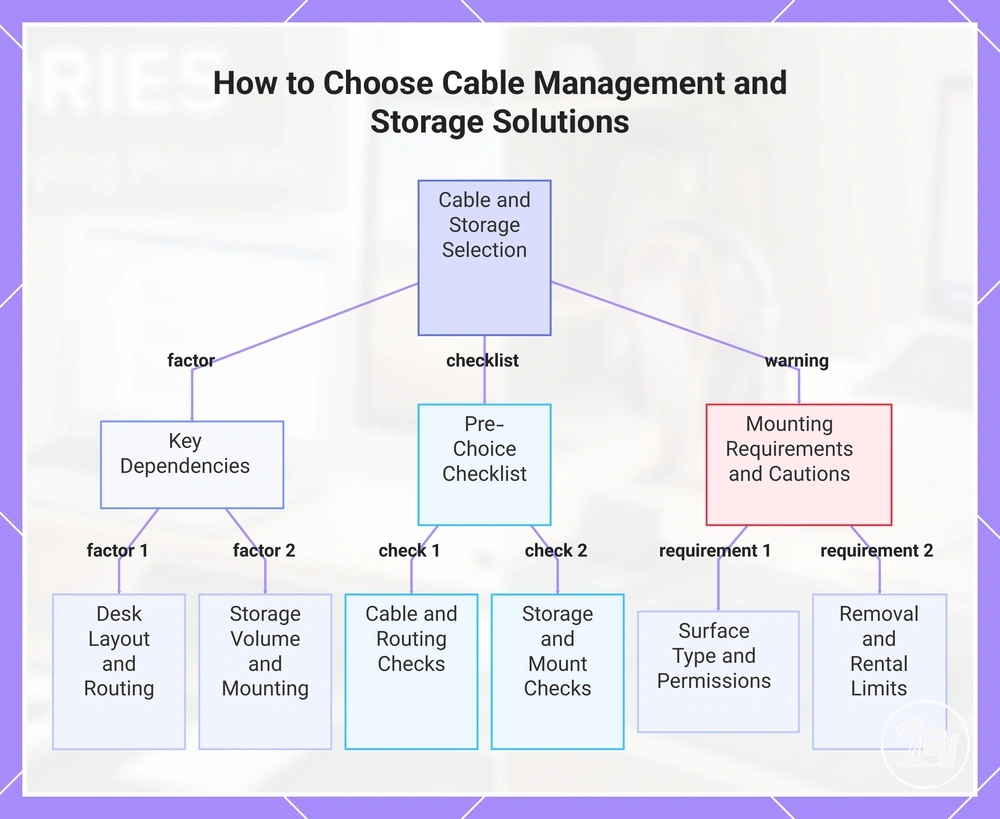
Compatibility starts with matching cable management tools and storage solutions to the workspace. For example, cable management accessories should fit cable count, charging locations, and routing paths, while shelves, drawers, and boxes should match storage requirements and available space. Use this checklist before choosing a setup:
- Verify cable count and routing complexity.
- Check charging locations and outlet access.
- Confirm available storage volume for less-used items.
- Assess desk edge, wall, or mounting compatibility.
- Review accessibility for frequently used wires and devices.
- Measure available space for trays, sleeves, boxes, shelves, or drawers.
Clips can help guide wires along desk edges, while sleeves may group multiple wires into a single route. Trays and boxes can reduce visible cable clutter when space allows, and shelves, drawers, or vertical storage can relocate less-used items away from the primary work area. Fit conditions vary by desk dimensions, accessibility needs, and mounting options, which is why installation limits should be evaluated before using adhesive, drilled, or under-desk solutions.
Caution: Temporary and rental setups may not be compatible with every mounting method. Adhesive products, drilling, or under-desk mounting can depend on surface type, permissions, and removal requirements, so compatibility should be checked before making workspace changes 【152†source】.
This chart shows the key factors to consider, the pre-purchase checklist, and mounting compatibility cautions for selecting cable management and storage solutions.
Common Mistakes and Maintenance Guidance
Common mistakes in desk accessory setups often arise from clutter, poor fit, weak lamp placement, cable spread, or neglected cleaning. These issues can reduce usable surface space and make routine maintenance more difficult. Regular maintenance focuses on preventing deterioration of desk usability rather than changing the setup entirely.
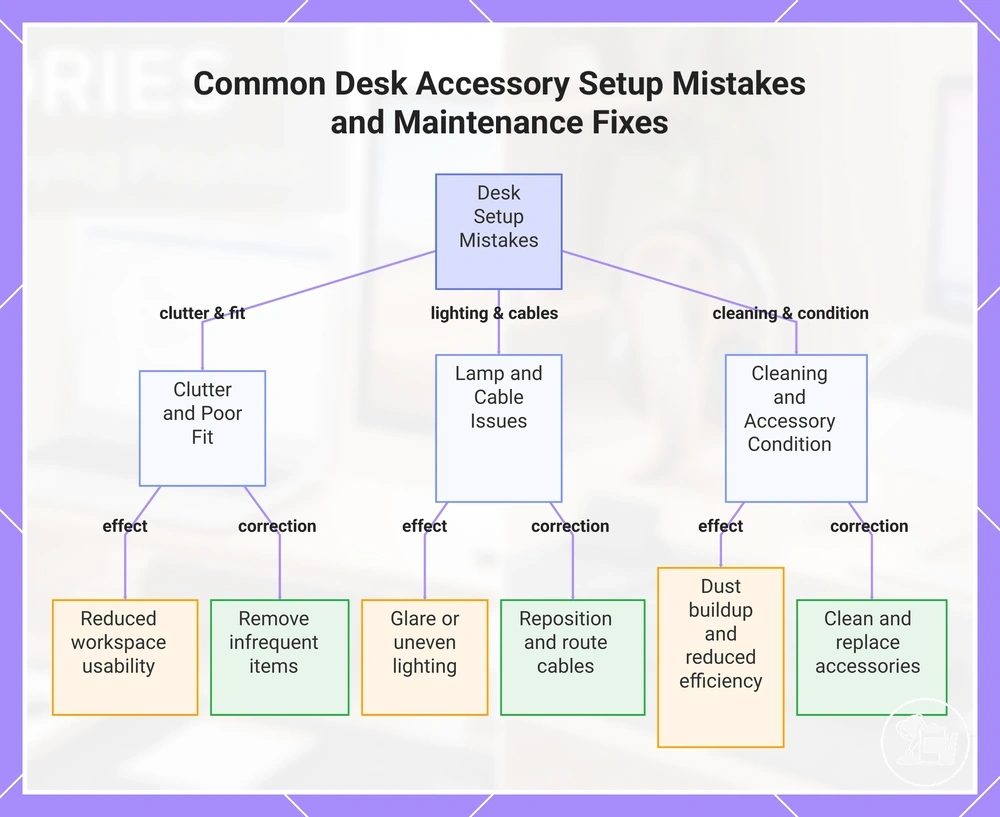
In scenarios where the desk feels crowded or cleaning becomes cumbersome, improper accessory placement or unmanaged wires are often the cause. Weak lamp placement can produce glare, while scattered cables increase dust accumulation. The following mistake-and-fix block illustrates common setup problems and conditional corrections:
- Mistake: Desktop overload with excessive items. Effect: Reduced workspace usability. Correction: Remove items not in frequent use to free up surface area.
- Mistake: Poor lamp placement. Effect: Glare or uneven lighting. Correction: Reposition lamps to align with reading or writing areas.
- Mistake: Cable spread across the desk. Effect: Harder cleaning and visual clutter. Correction: Re-route or group wires to maintain access and reduce dust accumulation.
- Mistake: Neglected cleaning under or around accessories. Effect: Dust buildup affecting usability. Correction: Clean surfaces and accessory contact points regularly.
- Mistake: Using damaged or misfitting accessories. Effect: Reduced efficiency and accessibility. Correction: Replace or reposition accessories when they no longer support intended use.
Maintenance actions such as removing, repositioning, cleaning, or replacing items should be applied based on the specific issue and desk conditions. This approach helps maintain desk usability over time while preventing common upkeep problems :contentReference[oaicite:0]{index=0}.
This chart categorizes common desk accessory mistakes, their effects on workspace usability, and the corresponding corrective actions.
Budget-Friendly and Value-Oriented Choices
Budget-friendly and value-oriented study desk accessories depend on functional impact rather than appearance alone. Value is assessed by how effectively an accessory addresses the current desk problem while supporting durability, adjustability, and space efficiency.
When a desk is limited in space or heavily used, prioritizing accessories that provide maximum utility for the lowest acceptable cost is effective. The following table illustrates priority decisions based on common desk challenges:
| Desk problem | Budget-friendly priority | Value reason | When to upgrade |
|---|---|---|---|
| Cluttered workspace | Compact organizers and trays | Maximizes usable surface, keeps items accessible | When storage volume or item frequency increases |
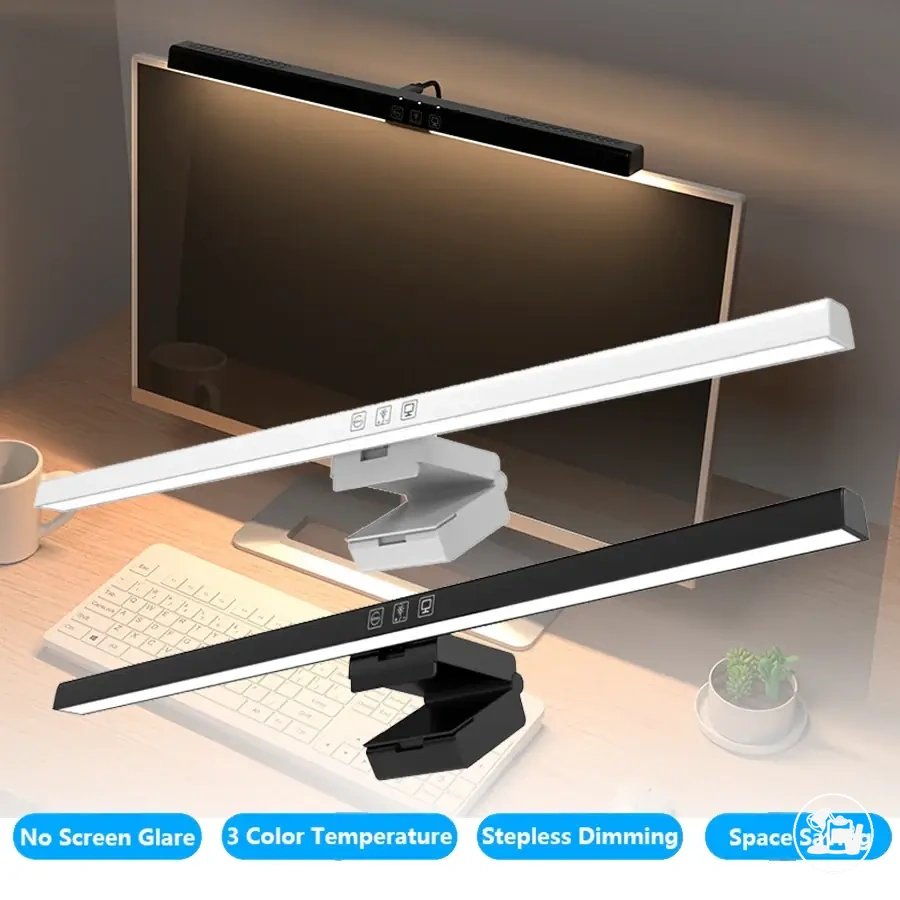
| Poor lighting | Adjustable lamps with brightness control | Improves visibility for varied tasks | If lamp wear or new task requirements arise |
| Scattered cables | Clips, sleeves, and simple wire organizers | Reduces clutter and eases maintenance | When device count or routing complexity increases |
| Limited desk area | Multi-function or stackable storage solutions | Supports frequent items while saving space | If desk layout or item volume changes |
Value assessment considers durability, adjustability, space saving, and multi-function design. These criteria guide budget-friendly buying priorities and inform upgrade decisions based on current needs and functional impact.
Low-cost items can often provide significant functional benefit when selected based on desk usage and workspace constraints. Safe price evaluation should be guided by market conditions and user requirements rather than assumptions about universal superiority.
Monitoring functional impact and desk requirements helps determine when accessories should be repositioned, cleaned, or replaced. External price-check readiness ensures users can assess current market availability and value before considering upgrades :contentReference[oaicite:0]{index=0}.
The products below are useful examples for comparing available options. Before buying, check that the compatibility criteria, key features, and product details match your needs.

Ideas for Effective Desk Setup Arrangements
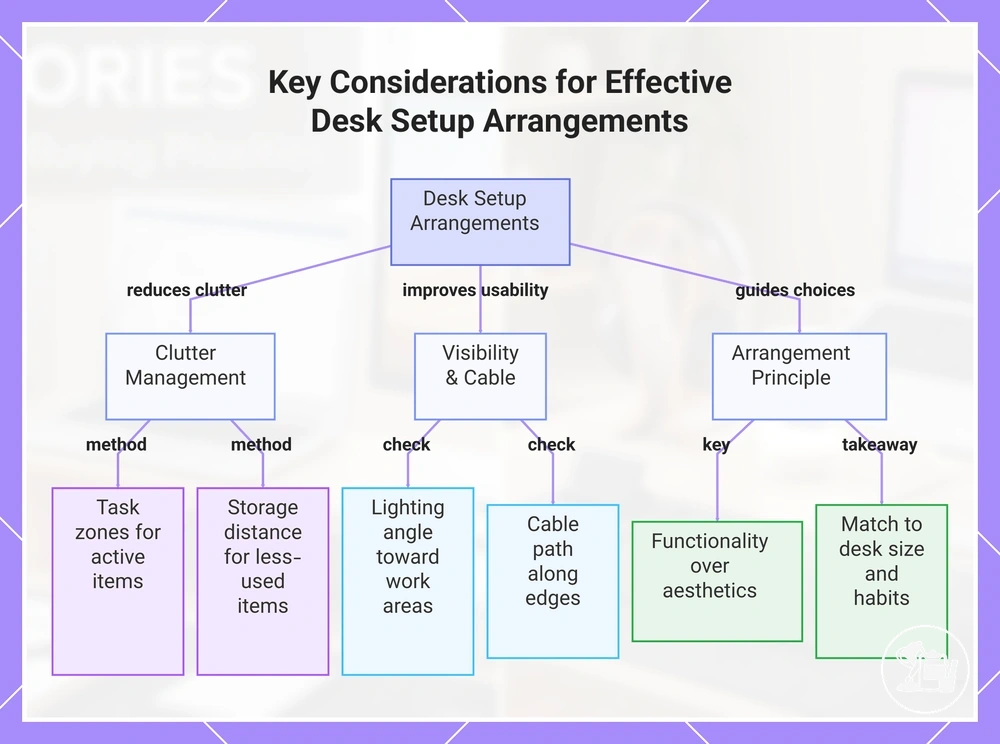
Desk setup arrangements depend on reach, visibility, cable direction, and available surface area. Compact desks, laptop-based study setups, stationery-heavy desks, and minimalist layouts may require different accessory arrangements to maintain a clean layout.
When the workspace feels cluttered or disorganized, task zones can help prioritize active items, while storage distance ensures less-used items are positioned away from main work areas. Lighting angle should minimize glare on reading or writing zones, and the cable path should be routed to avoid crossing frequently used surfaces. A mini-checklist illustrates key layout considerations:
- Task zones: Enhance reach by keeping primary study materials near the active workspace.
- Lighting angle: Improves visibility when lamps are oriented toward reading or writing areas.
- Organizer placement: Increases access efficiency by keeping pens, notes, and supplies within easy reach.
- Storage distance: Maintains surface clarity by positioning less-used items farther from the main desk zone.
- Cable path: Supports a clean layout by routing wires along edges or behind equipment.
- Desk mat footprint: Defines the main work zone while preserving usable desk space.
Effective accessory arrangement focuses on functionality rather than aesthetics. Layout choices should match desk size, accessory types, and study habits, ensuring a clean and usable desk without requiring a full step-by-step workflow or visual inspiration gallery :contentReference[oaicite:0]{index=0}.
This chart shows the main factors and checklist points for arranging a desk workspace effectively, including clutter management, visibility, cable routing, and the guiding principle of functionality over aesthetics.