How to Arrange Study Desk Accessories for a Clean Setup
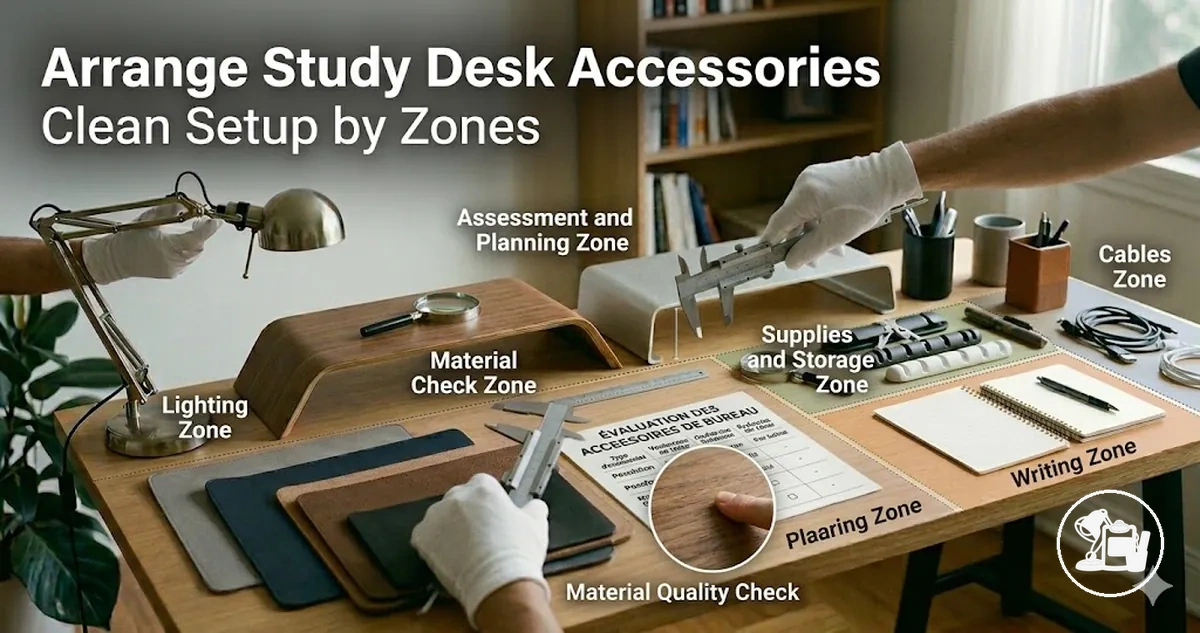
Arranging study desk accessories starts with organizing the desk surface into a clear, functional workspace. A clean setup enhances visibility, reduces clutter, and ensures daily-use items remain easily accessible. Begin by assessing the desk surface as the primary work area and determine placement based on how each accessory supports workflow efficiency.
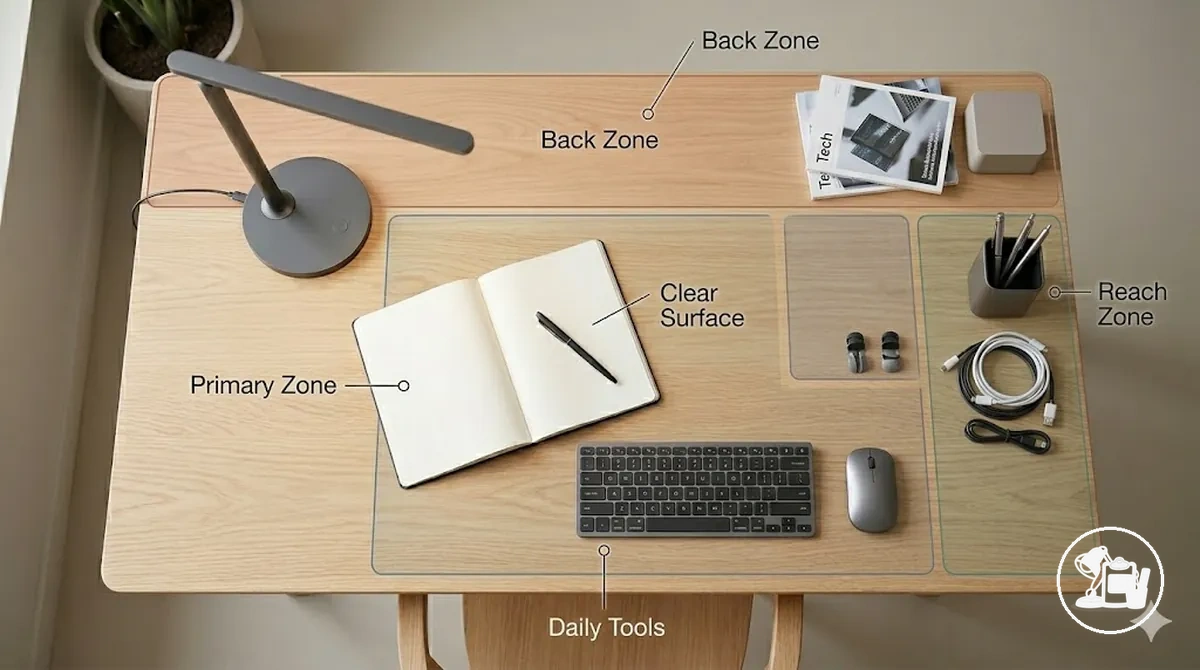
Usage zones help streamline accessory placement by grouping items according to their frequency of use and proximity needs. The primary work zone holds items used constantly, the reach zone contains frequently accessed tools, and back or side zones store less-used accessories. This arrangement promotes accessibility and reduces clutter while clarifying that the focus is on effective placement rather than acquiring every possible accessory.
To connect this setup to preparatory steps, first evaluate the desk surface for available space, remove unrelated items, and identify essential daily-use objects that require immediate access. These preparation steps ensure that the placement of study desk accessories supports a functional, organized, and clean workspace.
Preparing Your Desk and Work Surface
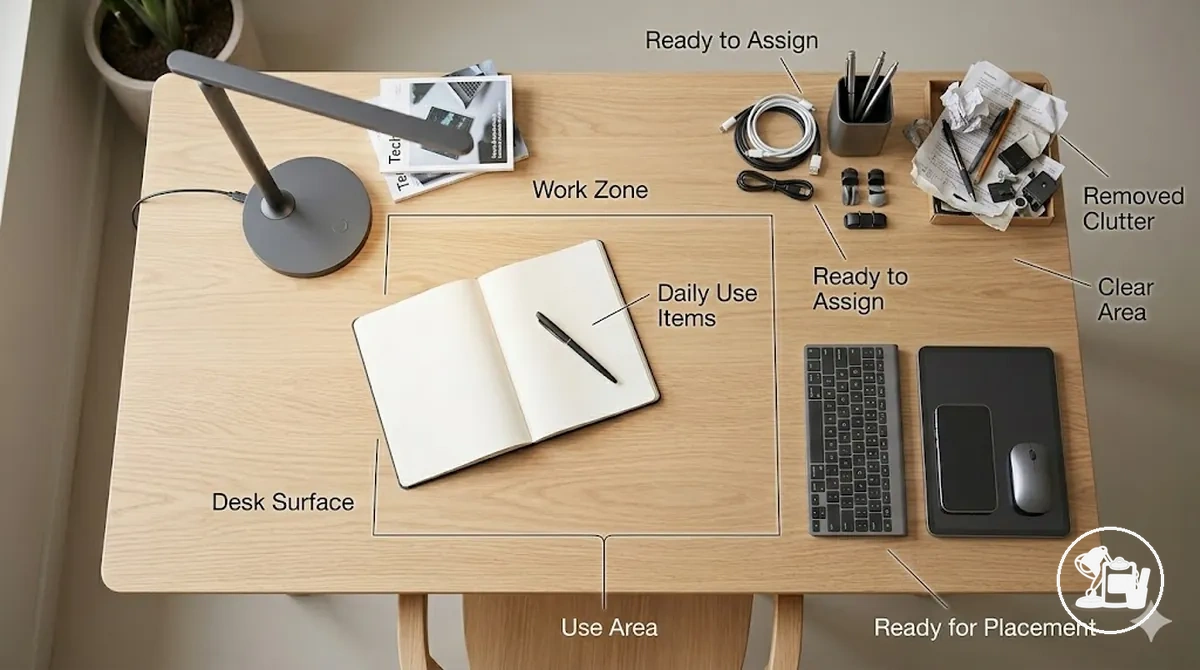
Preparation begins by assessing and clearing the desk surface to create a functional work area. A clear area reduces clutter and ensures that must-keep items are accessible, establishing the first condition for a clean setup. Start by removing unrelated items and organizing essential objects to define the available workspace.
Next, confirm readiness using a concise checklist. Ensure the central work area is unobstructed, daily-use items are within easy reach, unrelated objects are removed, surface space is sufficient, and items are identified for specific usage zones. This preparation focuses on arrangement readiness rather than deep cleaning. study desk setup accessories hub
Organizing Accessories by Usage Zones
Desk accessories should be grouped based on how often and how closely they are used to simplify placement and improve workflow. Dividing the workspace into primary, reach, and back or side zones provides a practical structure for accessory access and placement.
Usage zones help maintain a tidy desk by preventing clutter while allowing functional organization. Allocating items according to access level ensures that frequently used accessories are within easy reach, while less-used items are placed in back or side zones. These zones guide placement decisions without imposing rigid rules.
- Primary Work Zone: Immediate-use items such as writing instruments, essential devices, or frequently referenced documents positioned directly in front of the user.
- Reach Zone: Frequently accessed secondary tools like stationery, note pads, or reference materials positioned within lateral reach.
- Back or Side Zones: Storage items, cable management tools, or occasional-use accessories located toward the back or sides of the desk to keep the main workspace clear.