
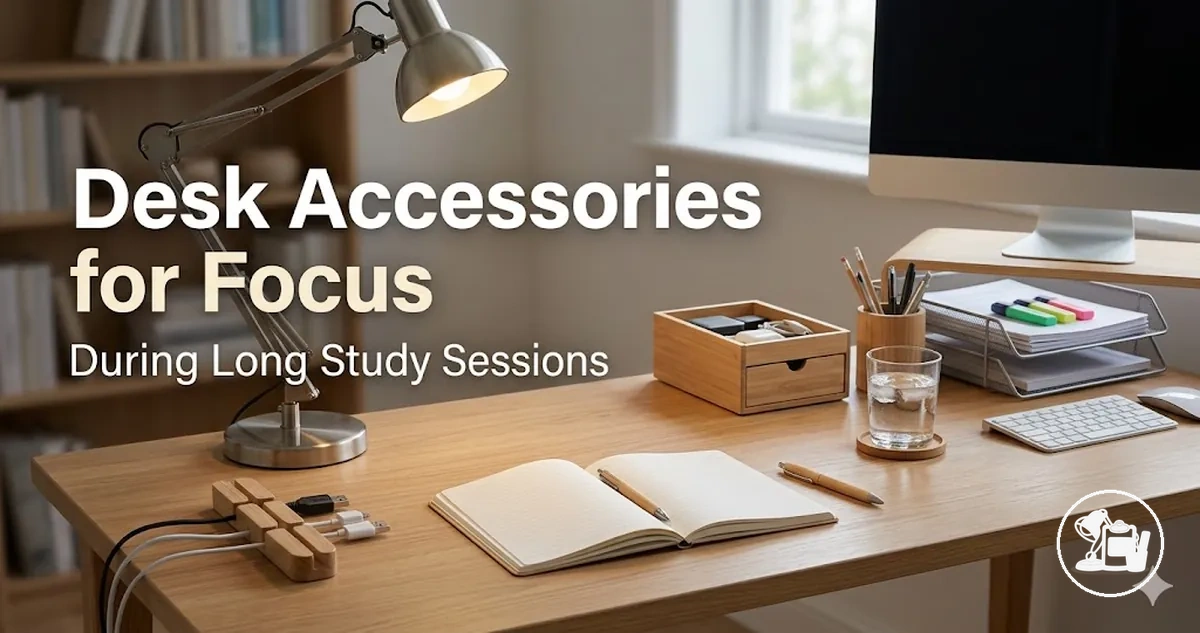
Optimizing Study Desk Accessories to Support Long Study Sessions
Optimizing study desk accessories means arranging and selecting workspace tools that support focus and sustained attention during extended study periods. Properly organized study desk items can enhance concentration, reduce distractions, and maintain comfort for long sessions. For a comprehensive understanding of these arrangements, refer to the study desk setup accessories hub.

Main categories of study desk accessories include ergonomic supports, lighting solutions, organizational tools, and environmental aids. Ergonomic items such as adjustable chairs, desk mats, and monitor stands help sustain posture and comfort, which may improve focus over time. Lighting accessories, including adjustable desk lamps, provide visual comfort and reduce eye strain. Organizational items, like desk trays and pen holders, help minimize clutter, while environmental or auditory tools, such as white-noise devices, can assist in maintaining concentration. Each category contributes to a workspace that supports attentive study practices.
Arranging these categories effectively lays the foundation for more detailed guidance on core accessories that enhance focus. Subsequent sections will explore practical examples and selection considerations, building upon this macro overview to inform optimal desk setup strategies.
Core Accessories That Enhance Focus
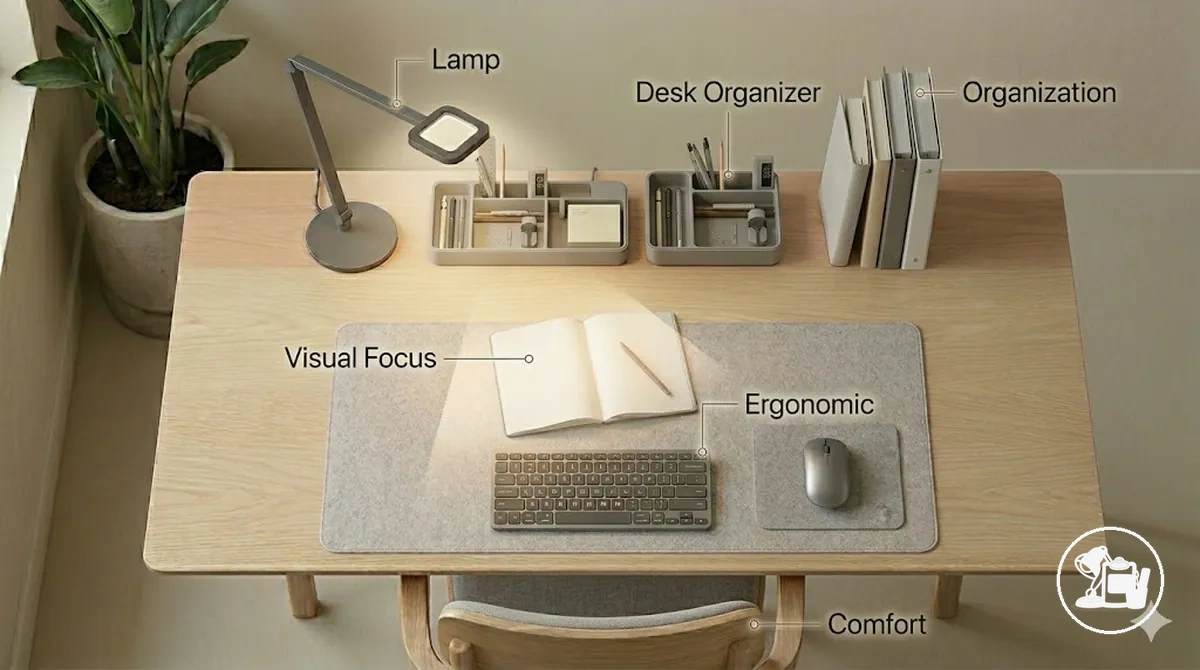
Core accessories that enhance focus are study desk items selected for their ability to support attention, comfort, and organization during study sessions. A desk organizer, a lamp, and ergonomic workspace tools are the primary accessory types because they address visual distractions, environmental clarity, and physical comfort. Together, these main types include desk organizers, lamps, and ergonomic supports.
Main accessory categories contribute to focus through different attributes and selection criteria. A desk organizer supports organization by keeping frequently used study items structured and easier to access, while a lamp with suitable lighting conditions can improve visual focus and comfort during extended reading or writing tasks. Ergonomic accessories help create a more comfortable working position, which may support concentration when study sessions are prolonged. These accessory types connect focus outcomes to specific attributes, reinforcing an entity-attribute-value approach to desk setup decisions.
Ergonomic Tools for Comfort and Alertness
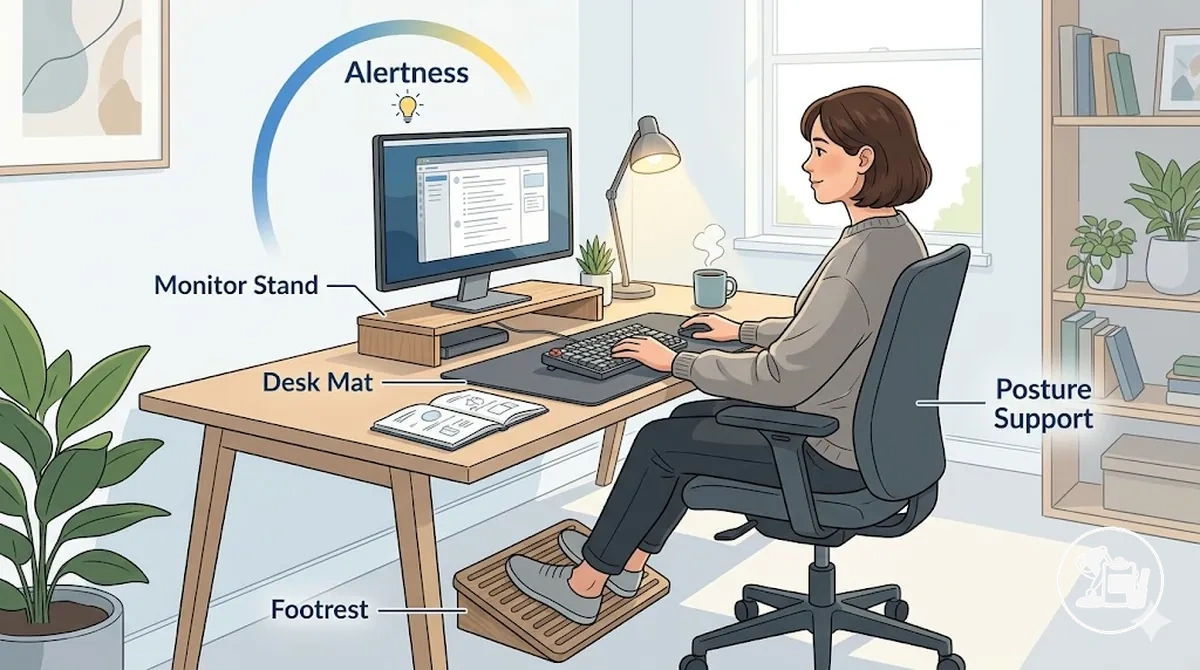
Ergonomic tools for comfort and alertness refer to desk accessories designed to support posture and reduce strain, helping maintain sustained attention during study sessions. Resources focused on ergonomic accessories for focus highlight how proper alignment and supportive design can enhance both comfort and alertness. Key tools include monitor stands, desk mats, and footrests, each linking posture to improved focus outcomes.
In practical application, a monitor stand can elevate the screen to eye level, reducing neck strain, while a desk mat cushions wrists and hands during extended writing tasks. A footrest supports lower body posture, potentially reducing fatigue over long periods. Together, these ergonomic tools create a workspace that may enhance concentration and minimize discomfort, supporting alertness when study sessions are prolonged.:contentReference[oaicite:0]{index=0}
Lighting Solutions to Improve Visual Focus
Lighting solutions to improve visual focus refer to desk lamps and related accessories that help reduce eye strain and create a more comfortable study environment. Guidance on lighting accessories for focus emphasizes proper light placement and adjustment to support visual clarity and comfort. A desk lamp with adjustable positioning directs light to the reading or working area, reducing contrast and supporting sustained attention.
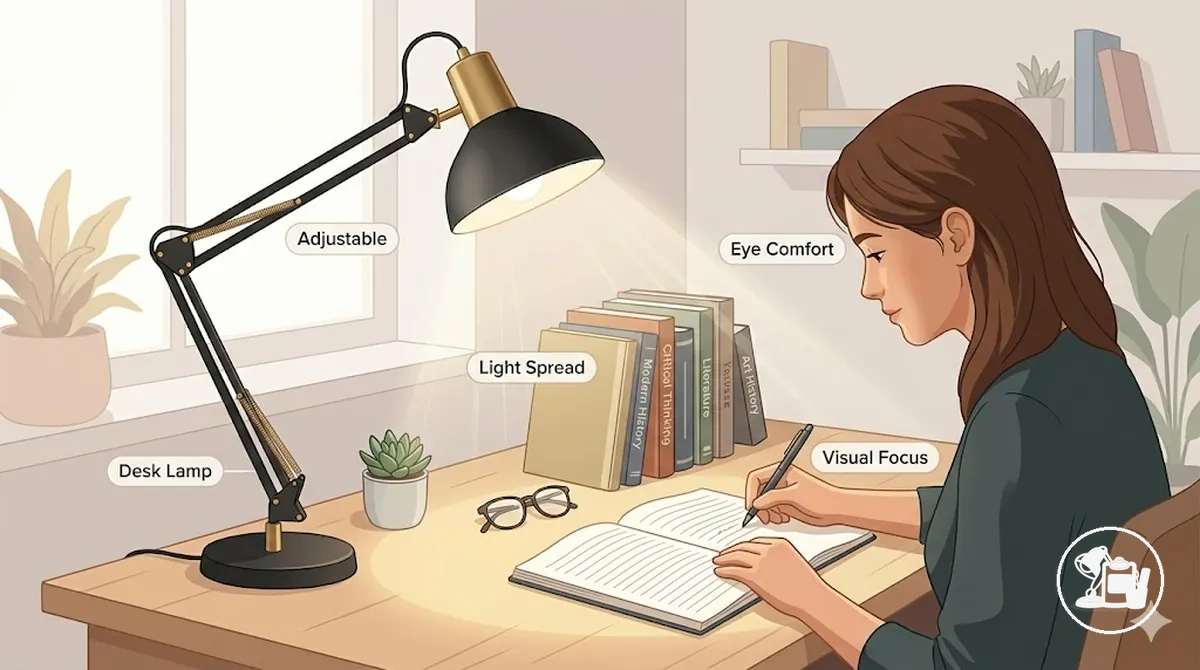
Adjustable desk lamps allow the user to modify light angle and intensity, which can improve eye comfort and visual focus depending on desk setup and task. By directing light appropriately, these lighting solutions minimize glare and uneven illumination that may otherwise interrupt study concentration. When combined with correct positioning, an adjustable desk lamp can create a workspace that supports prolonged focus and reduces visual fatigue.:contentReference[oaicite:0]{index=0}
Organizers and Desk Layouts to Minimize Distractions
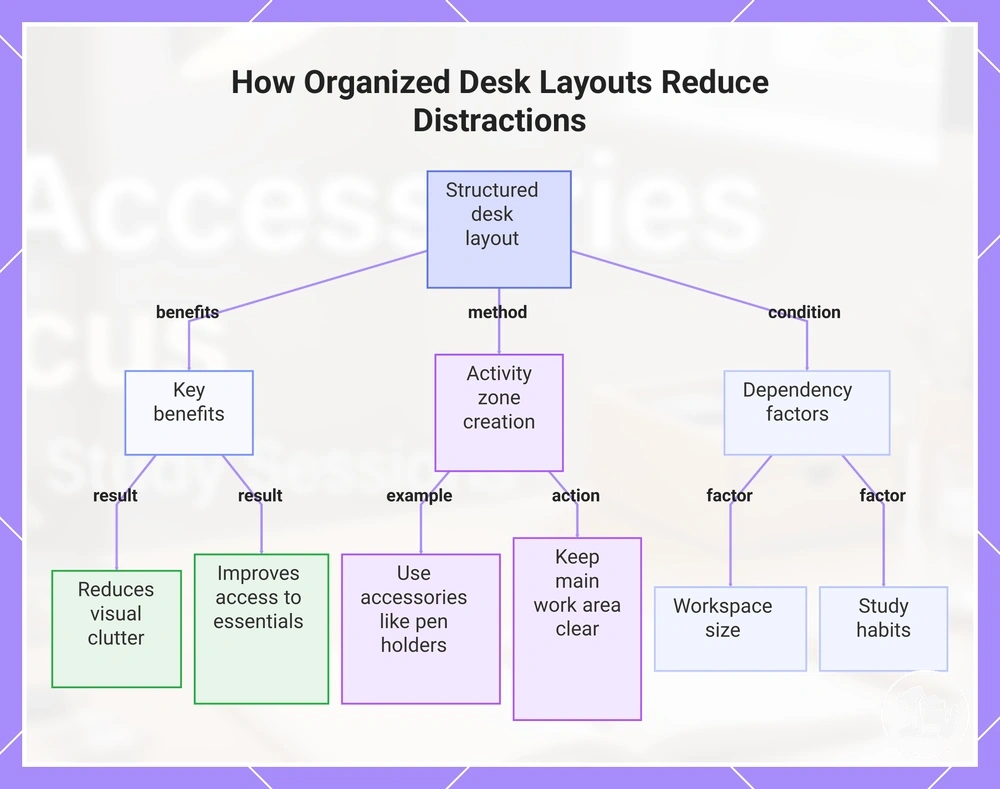
When study materials are scattered across a workspace, attention can shift away from the primary task and toward unnecessary visual stimuli. A structured desk layout supports organization by assigning clear locations to accessories, which can help reduce clutter and maintain focus. The effect depends on workspace size and study habits, but organized placement often makes essential items easier to access while limiting distractions.
arranged desk accessories can serve as a practical criterion for creating activity zones within a desk layout. Accessories such as pen holders, trays, and storage containers help separate frequently used items from nonessential objects. A desk layout that keeps the main work area clear while grouping related accessories may improve attention by reducing visual clutter. When organization and layout work together, focus can be directed toward study tasks with fewer interruptions.
This chart explains how a structured desk layout minimizes distractions through organized placement, activity zones, and dependency on personal factors.
Time-Management Tools for Sustained Concentration
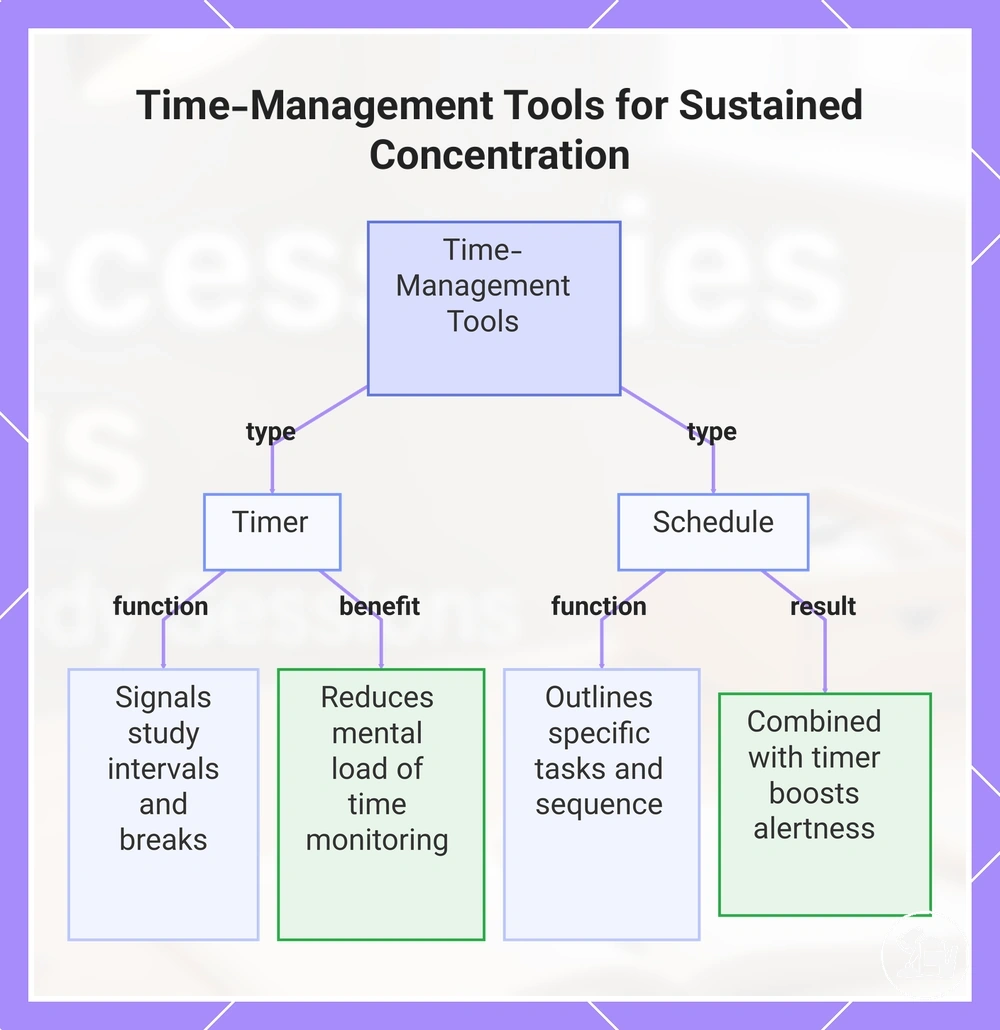
Time-management tools help maintain focus during study sessions by providing structure and tracking duration. Tools such as timers and schedules can guide attention, making it easier to sustain concentration when session lengths vary. By creating a defined timeframe for tasks, these tools reduce the mental load of monitoring time manually.
For example, a timer can signal study intervals and breaks, while a schedule outlines specific tasks and their sequence during a study session. Using a timer in combination with a planned schedule can help maintain alertness and manage session duration effectively. When these tools are applied thoughtfully, concentration may be easier to sustain and study efficiency improved.:contentReference[oaicite:0]{index=0}
This chart shows the two main types of time-management tools—timers and schedules—and how they help maintain focus and reduce mental load during study sessions.
Environmental and Auditory Support Accessories
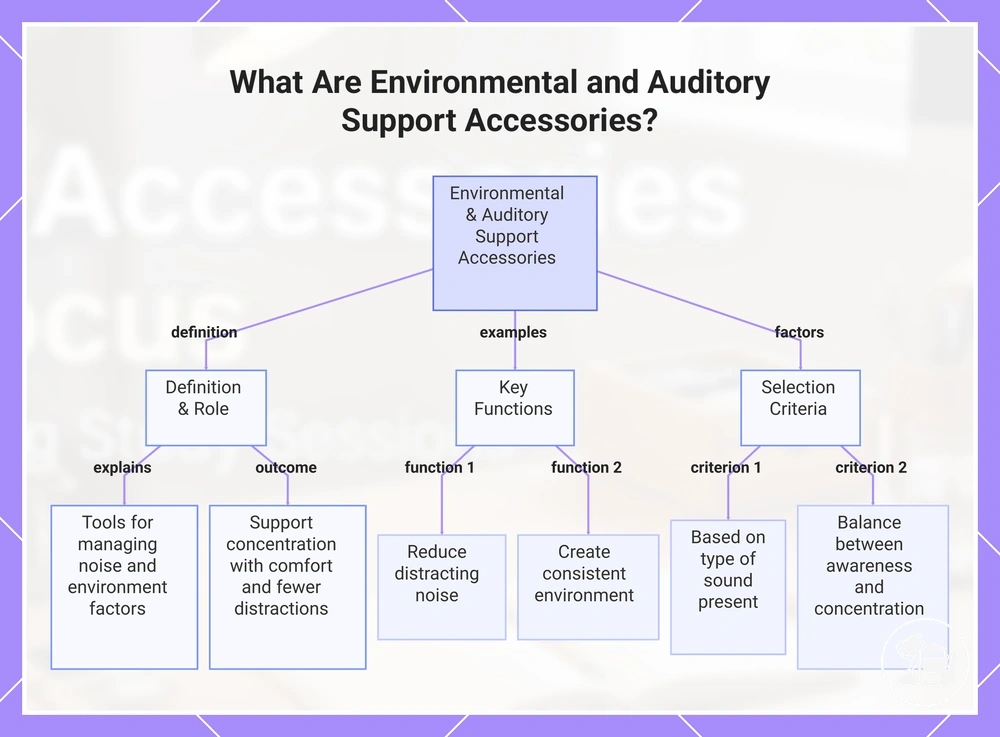
Environmental and auditory support accessories are tools that help manage noise, sound conditions, and workspace environment factors that influence focus. An environmental and auditory accessory is defined by attributes that support concentration through greater auditory comfort and fewer environmental distractions. The effect on focus can vary based on noise levels, study conditions, and individual preferences within the environment.
Examples include accessories that reduce distracting noise, moderate sound exposure, or create a more consistent environment for concentration. Auditory conditions can affect focus when background noise competes for attention, making environmental control an important accessory attribute. Environmental accessory selection depends on the type of sound present and the desired balance between awareness and concentration. When noise and environment factors are managed appropriately, focus may be supported with fewer interruptions and greater comfort.
This chart shows the definition, key functions, and selection factors of environmental and auditory support accessories.
Noise-Reduction Tools for Focused Work
When background conversations, mechanical sounds, or recurring interruptions compete for attention, a noise-reduction tool can help create a more controlled desk environment for focus. A noise-reduction accessory works by limiting distracting sound that may disrupt concentration during study or work tasks. The effect of noise reduction depends on the environment, the type of noise present, and the level of auditory distraction.
A desk setup may use a noise-reduction accessory to moderate environmental sound and support alertness during tasks that require sustained attention. For example, reducing background noise can make it easier to maintain focus on reading, writing, or problem-solving activities when distractions are present. Noise reduction supports concentration by helping the environment remain more consistent without guaranteeing complete isolation from surrounding sound.
Maintaining Desk Accessories for Long-Term Efficiency
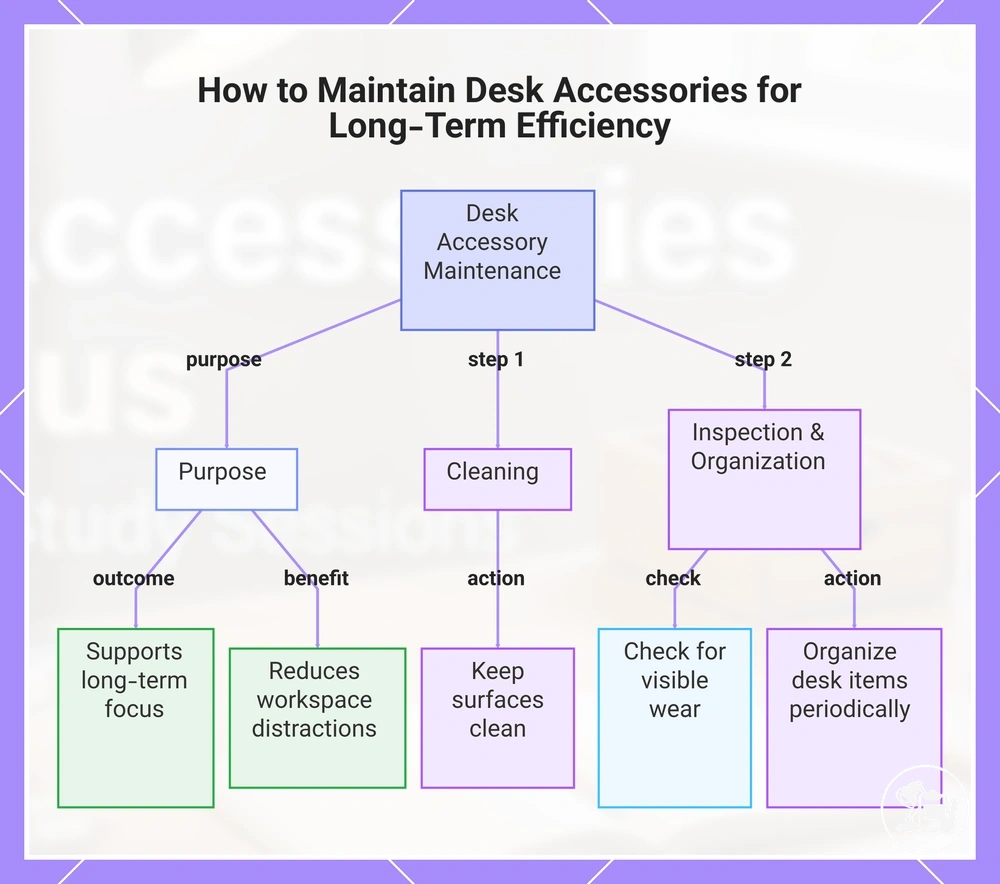
Maintenance helps a desk accessory remain functional and supportive for long-term focus. Regular care and a clean workspace can reduce distractions caused by dust, clutter, or declining accessory performance. Maintenance also supports desk efficiency by keeping focus-related accessories ready for consistent use.
A simple maintenance routine may include keeping each accessory clean, checking for visible wear, and organizing desk items periodically. Clean surfaces and well-maintained accessories can make the workspace easier to use and support concentration during study sessions. When maintenance becomes a regular habit, desk efficiency and the long-term focus value of each accessory may remain more consistent over time.
This chart outlines the purpose and key steps for maintaining desk accessories to support long-term focus and reduce distractions.
Cleaning and Reorganizing Routines
When a desk begins to accumulate dust, misplaced items, or unused accessories, a cleaning and reorganizing routine can help restore organization and support focus. A structured routine keeps each accessory easier to access and may reduce distractions caused by cluttered work areas. The effect on focus and accessory condition depends on the consistency of the routine and the type of items being maintained.
An example routine may include cleaning frequently used surfaces, returning each accessory to a designated location, and reviewing desk organization after study sessions. This workflow supports organization by keeping essential accessories visible and reducing time spent searching for items. When cleaning and organization become part of a regular routine, the effect on accessory longevity and focus may become more consistent.
Common Mistakes That Break Focus and How to Avoid Them
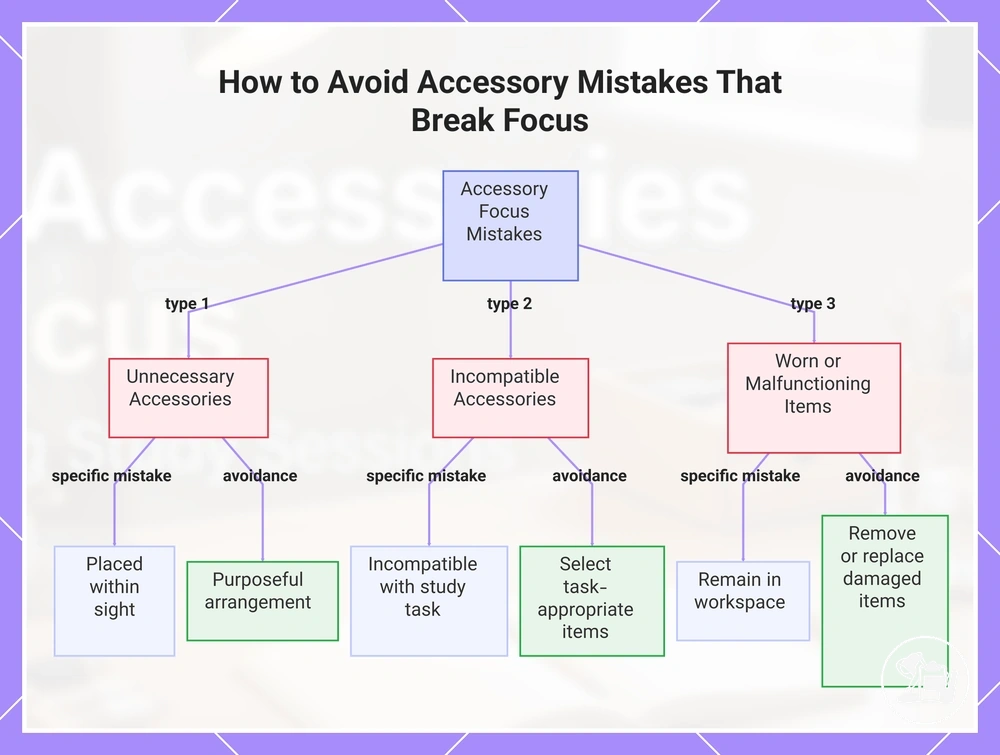
Accessory-related mistakes often occur when a desk environment includes items that distract rather than support attention. Such mistakes can shift focus away from the primary task, reducing productivity and increasing cognitive load. Avoiding these mistakes involves arranging and using each desk accessory purposefully to maintain a workspace that supports sustained attention.
Examples of common mistakes include placing unnecessary accessories within sight, using accessories incompatible with the study task, or allowing worn or malfunctioning items to remain in the workspace. Each of these mistakes can interrupt attention because the desk no longer provides a supportive environment for focus. Focusing on error prevention and careful accessory selection can help preserve concentration and reduce distractions:contentReference[oaicite:0]{index=0}.
This chart shows three common accessory-related mistakes that interrupt focus and the corresponding prevention strategies.
Preventing Clutter and Misplacement of Desk Accessories
Cluttered or misplaced desk accessories can disrupt focus by increasing the time and effort needed to find essential items. Preventing this clutter involves maintaining a clear and organized desk where each accessory has a designated place, which supports sustained attention. Applying organization routines consistently can reduce distraction and improve the efficiency of study or work sessions.
Methods to prevent clutter include grouping accessories by function, assigning zones for specific items, and using setup ideas for study sessions as placement criteria. Regularly returning items to their designated spots, limiting unnecessary objects on the desk, and periodically reviewing the arrangement help sustain clarity and order. When these strategies are applied consistently, focus is more likely to be preserved and accessory misplacement minimized:contentReference[oaicite:0]{index=0}.