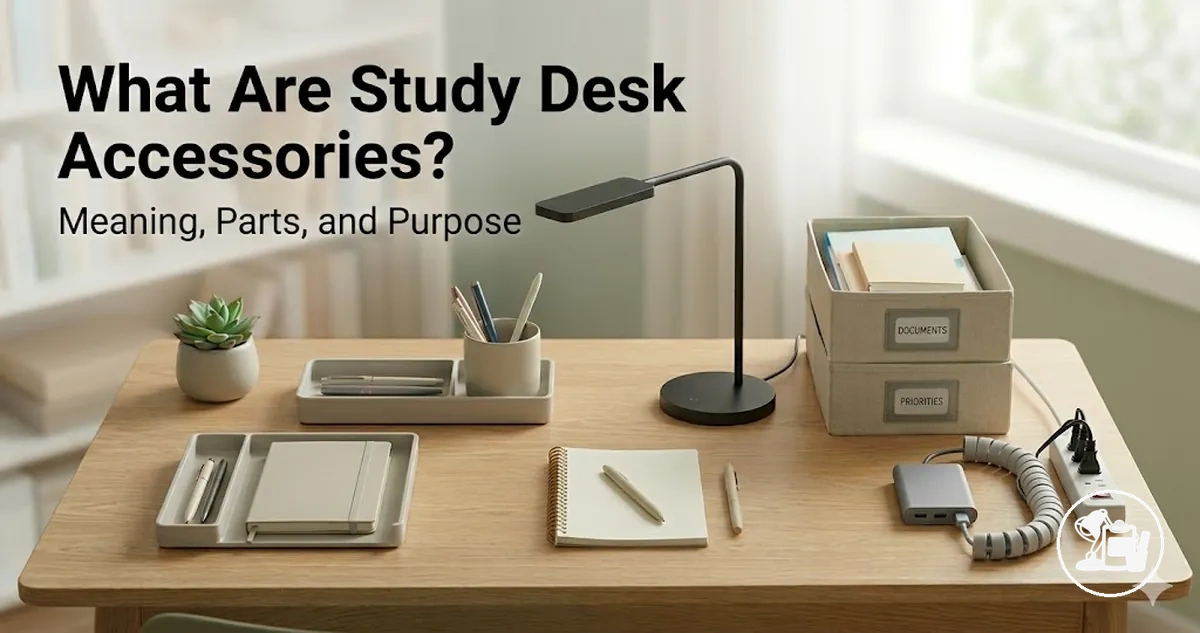
What Are Study Desk Setup Accessories? Meaning, Parts, and Purpose
Study desk setup accessories are supporting items that organize, light, protect, and improve the usable area around a study desk. In this study desk setup accessories hub, the term refers to add-ons such as organizers, lighting items, cable-control tools, storage aids, and surface-support items that help a desk work better without becoming the desk itself.
The purpose of study desk setup accessories is to make study materials easier to reach, reduce visual clutter, support focused work, and improve the comfort of the workspace when the accessory fits the desk, user, and study routine. A lamp may support visibility, an organizer may separate supplies, and a cable holder may keep wires controlled, but the usefulness of each item depends on the actual desk layout and study habits.
This page explains the meaning, scope, main parts, common examples, and purpose of study desk accessories before separating them from furniture and decor. A desk, chair, or large shelving unit is usually furniture; an accessory is typically a smaller functional support item added to the study setup rather than the main structure of the workspace.
Understanding the scope and definition of study desk accessories
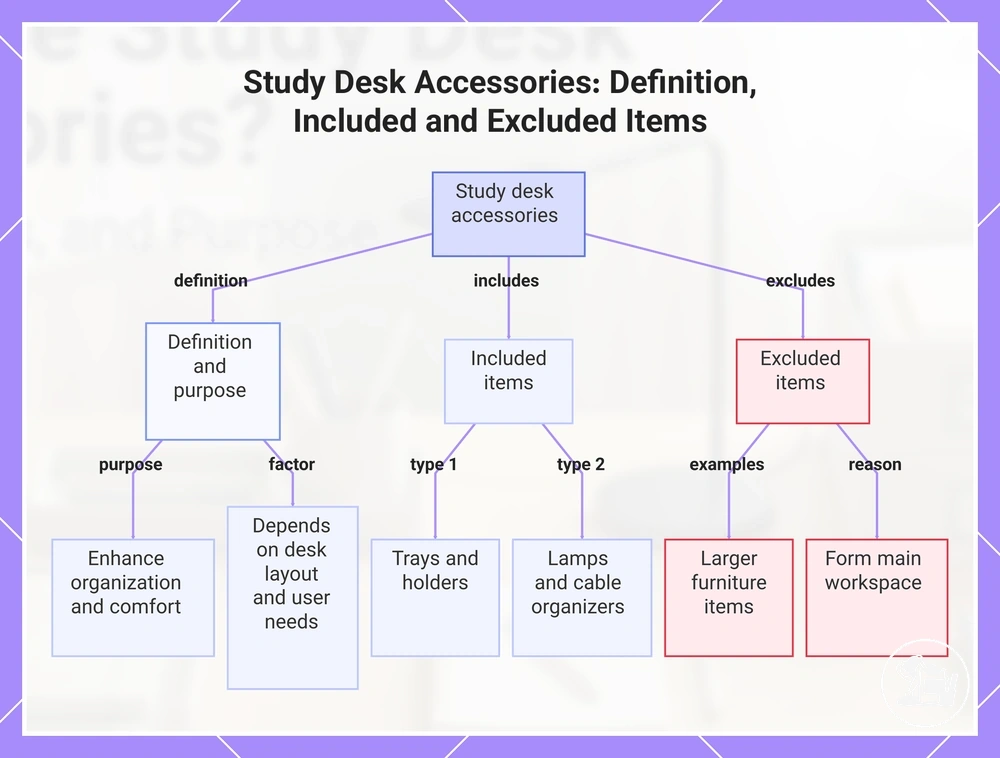
Study desk accessories are items that enhance the organization, usability, and comfort of a study desk. They encompass products such as organizers, storage aids, lighting, and cable management tools that supplement the desk without being part of its primary structure.
These accessories are designed to improve accessibility of study materials, reduce clutter, and support focused work. While most small items like trays, holders, lamps, and cable organizers qualify as accessories, larger furniture including desks, chairs, or shelving units are excluded since they form the main workspace rather than act as supplemental tools.
By defining them in terms of supporting function—organization, storage, lighting, and cable control—study desk accessories can be understood without cataloging every item. Their effectiveness typically depends on how well each accessory aligns with the desk layout, user requirements, and study activities, ensuring practical and ergonomic usage across different setups.
This chart defines study desk accessories, lists included and excluded items, and explains factors for effectiveness.
What counts as a study desk accessory
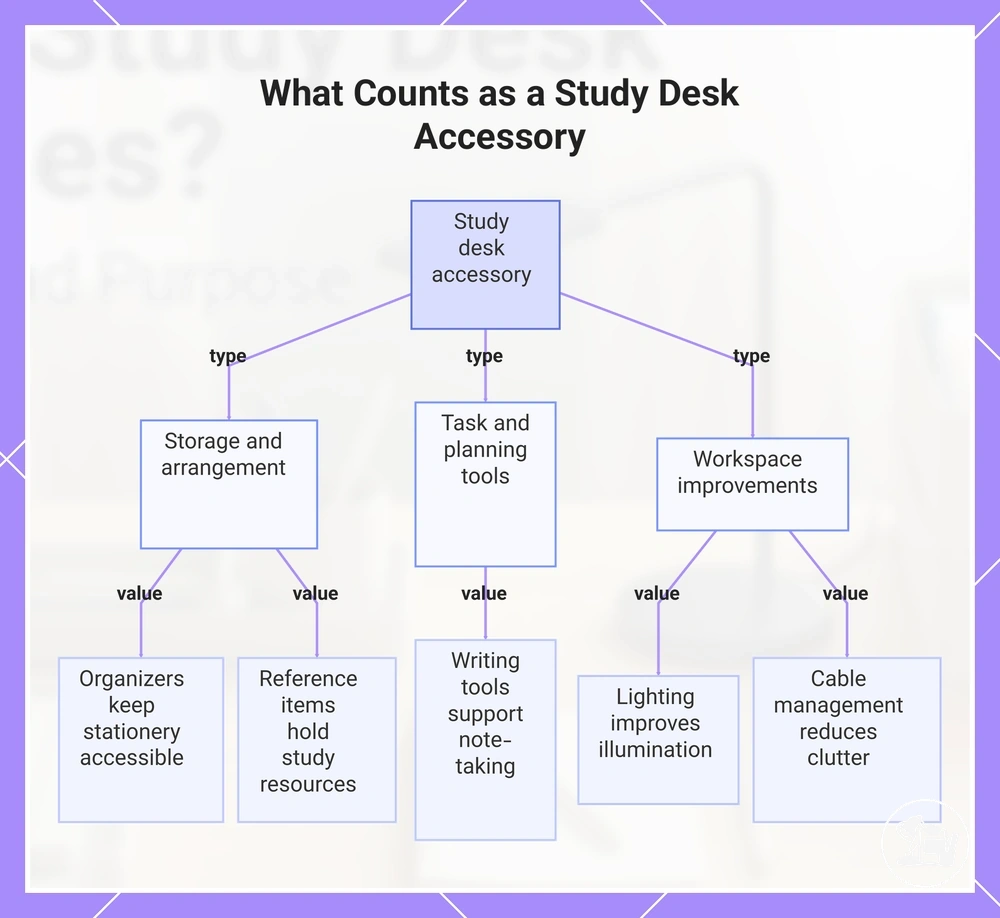
A study desk accessory is an item that supports organization, writing, planning, storage, or desk usability without serving as the main desk structure. Items are generally included when their primary role is to assist study activities or improve workspace management.
- Organizers → Attribute: storage and arrangement → Value: help keep stationery, papers, or small supplies accessible.
- Writing and planning tools → Attribute: task management → Value: support note-taking, scheduling, and study tracking.
- Desk lighting → Attribute: workspace visibility → Value: can improve illumination for reading or writing tasks.
- Cable management items → Attribute: workspace control → Value: help reduce wire clutter around the study area.
- Reference and support items → Attribute: material access → Value: may assist with holding, marking, or organizing study resources.
For a broader example of included items, an accessories checklist can help distinguish supporting accessories from furniture or other primary workspace components.
This chart shows the main categories of study desk accessories and their specific functions.
What does not count as a study desk accessory
Items that are central to the structure or core function of a workspace do not qualify as study desk accessories. These are generally furniture pieces or primary equipment that are not intended to supplement or organize the desk's immediate study area.
- Desks and chairs → Attribute: structural role → Value: form the primary workspace and are not supplemental items.
- Shelving and cabinets → Attribute: major storage → Value: serve as main storage solutions rather than desk support.
- Large electronics → Attribute: core function → Value: computers, printers, and monitors are tools, not accessories.
- Non-functional decor → Attribute: purely ornamental → Value: items that do not aid organization, study workflow, or desk efficiency.
To better distinguish functional accessories from non-essential items, consult the useful versus unnecessary accessories reference, which clarifies practical inclusion boundaries.
Main components and types of study desk accessories
Study desk accessories consist of several primary components that support organization, storage, lighting, and cable management. Each component type addresses a specific aspect of desk functionality, ensuring study materials remain organized, accessible, and the workspace remains efficient and manageable.
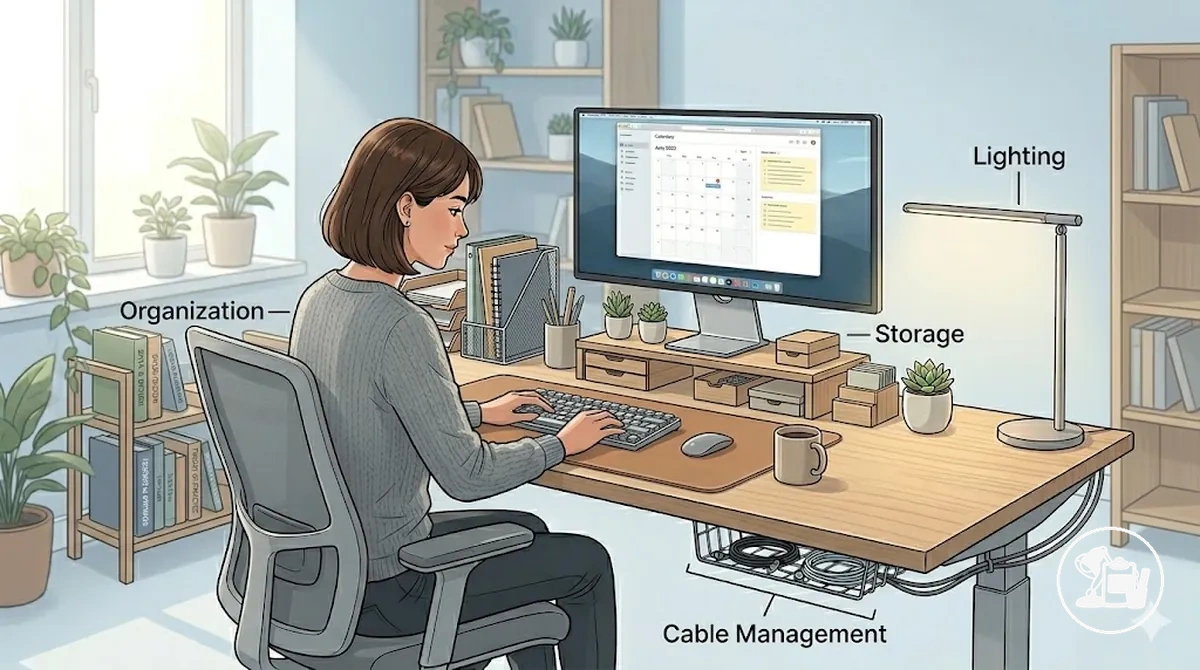
| Component Type | Attribute | Value |
|---|---|---|
| Organization | Arrangement | Accessories such as trays, holders, and organizers that keep stationery and papers sorted and accessible. |
| Storage | Space management | Items that provide designated areas for supplies, helping to maintain a tidy desk surface. |
| Lighting | Visibility | Desk lamps or task lights that can enhance reading, writing, or screen-based study tasks. |
| Cable Management | Workspace control | Tools such as clips, holders, and sleeves that help organize and contain wires for a neater desk layout. |
Evaluating accessories by their functional role rather than form helps clarify which items enhance desk efficiency. This perspective also aligns with essential study desk accessory functions, providing criteria for selecting the most practical components【message_idx†source】.
Organization and storage items
Organization and storage items are study desk accessories that help assign dedicated space to materials, making supplies easier to sort and access while reducing workspace clutter. Their function depends on the type of items being stored and the available desk area.
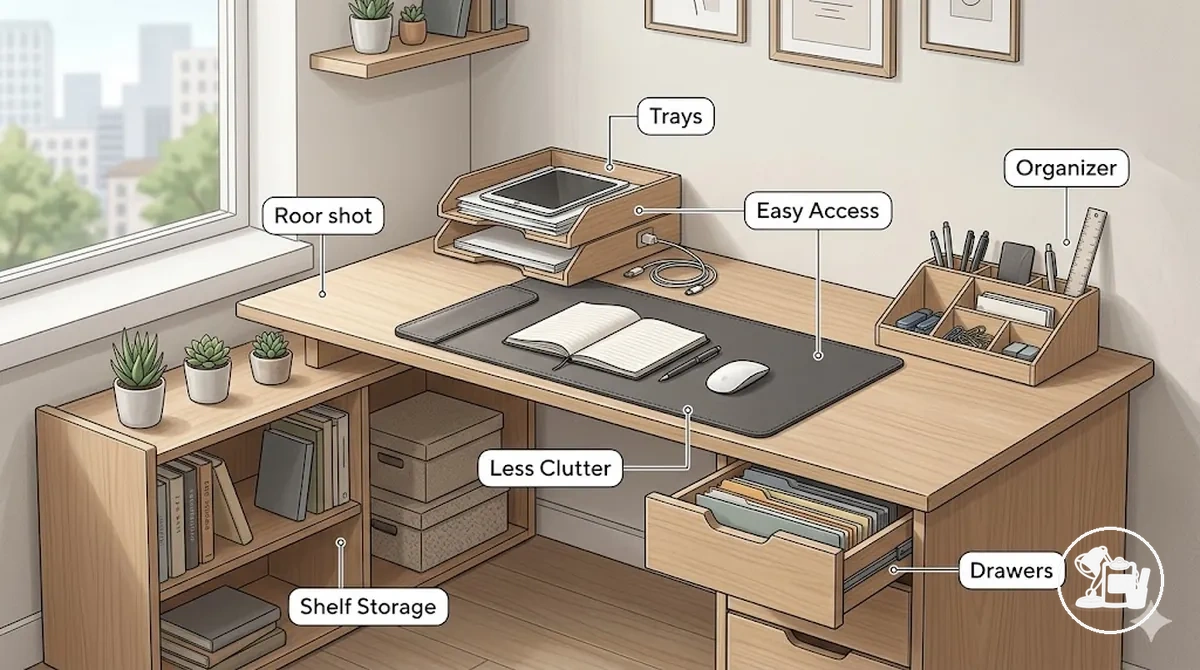
- Desk drawers → Function: enclosed storage → Effect: can keep supplies separated from active work areas and reduce visual distraction.
- Desk trays → Function: material grouping → Effect: help organize papers, notebooks, and loose documents into designated sections.
- Desk organizers → Function: compartmentalization → Effect: may improve access to stationery and frequently used study tools.
- Shelf accessories → Function: vertical storage support → Effect: can use surrounding space more efficiently while keeping resources within reach.
Suitable organization methods often depend on workspace size and study habits. For practical examples of accessory combinations, an accessories checklist can help identify organization and storage arrangements for different desk setups.
Lighting and work-support items
Lighting and work-support items are desk accessories that improve visibility and support ergonomic study conditions. They include desk lamps and task lighting that focus illumination on reading, writing, or screen-based work, helping reduce eye strain and enhance workspace comfort.
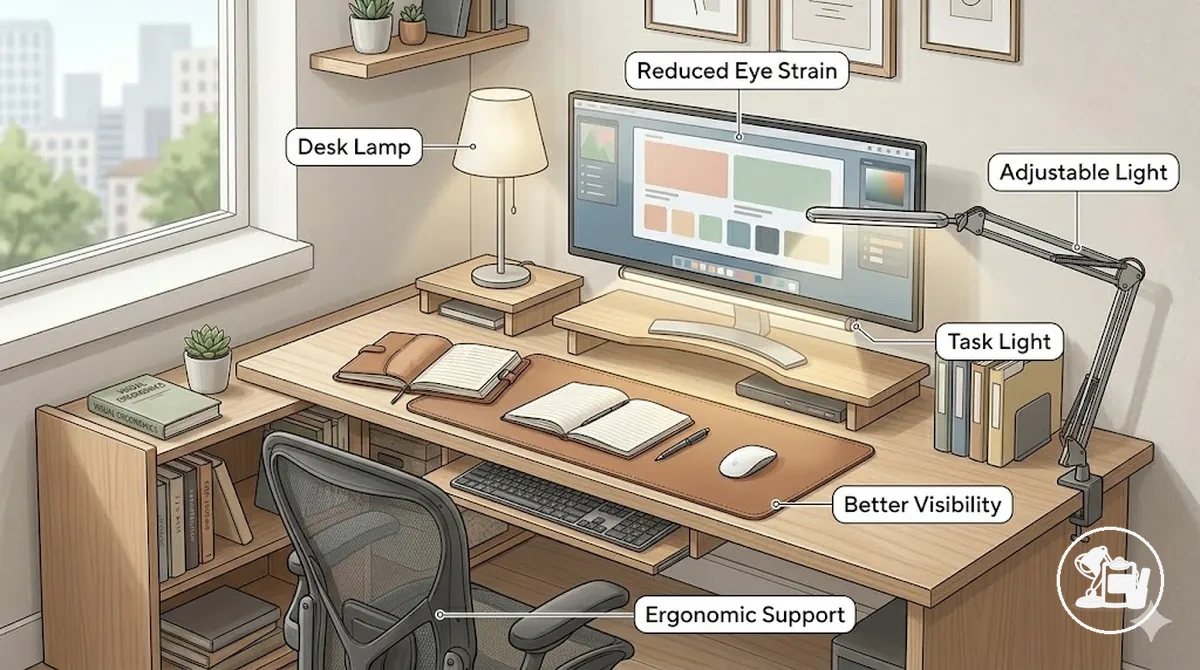
- Desk lamps → Function: focused illumination → Effect: can enhance visibility of study materials and workspace details.
- Task lighting → Function: targeted light → Effect: may improve concentration on specific study tasks without over-illuminating surrounding areas.
- Adjustable lighting accessories → Function: directional control → Effect: allow positioning of light to suit different desk setups and user preferences.
- Visual ergonomics supports → Function: eye comfort → Effect: can contribute to better posture and reduce visual fatigue during study sessions.
Choosing appropriate lighting often depends on desk layout and study activity. These considerations align with essential study desk accessory functions, clarifying practical roles of lighting in an effective study setup .
Cable management and surface-support items
Cable management and surface-support items are desk accessories that organize wires and protect work surfaces, improving desk safety and usability. Their function is to reduce cable clutter while maintaining clear, stable areas for study materials, helping prevent accidental damage or entanglement.
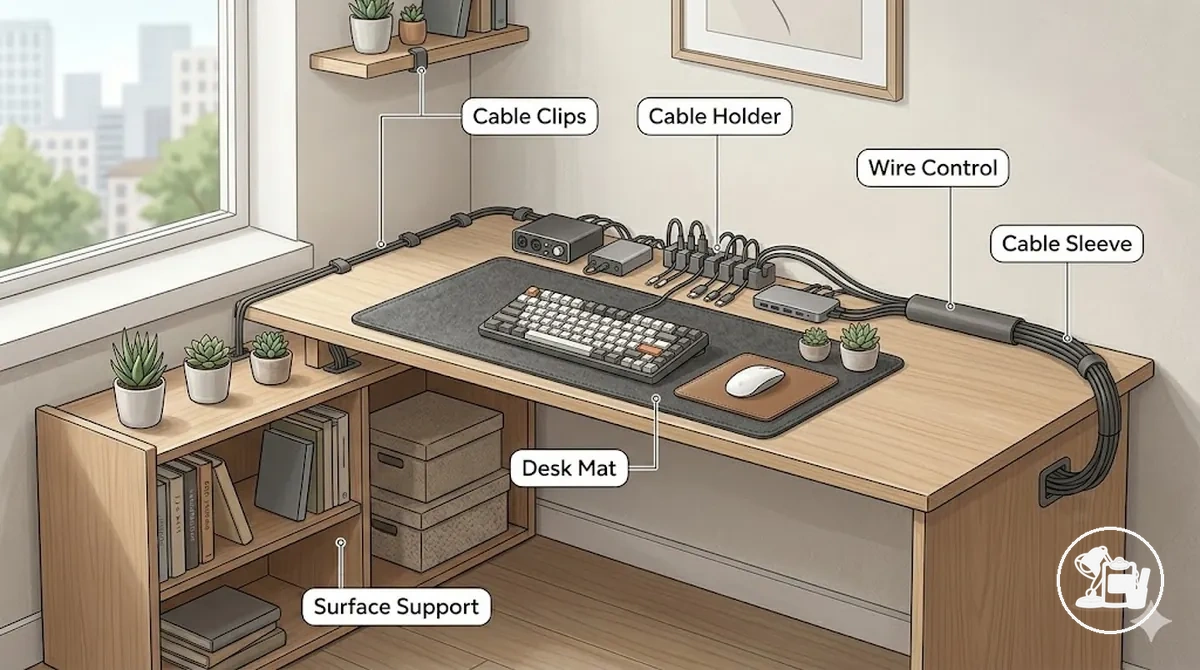
- Cable clips → Attribute: wire routing → Value: can guide cables along designated paths and prevent tangling.
- Cable holders → Attribute: cable access → Value: may keep charging or device cables within easy reach.
- Cable sleeves → Attribute: wire grouping → Value: can bundle multiple cables into a more organized arrangement.
- Desk mats → Attribute: surface support → Value: may define a working area and protect the desk from scratches or spills.
- Protective surface accessories → Attribute: workspace preservation → Value: can reduce direct contact between study tools and the desk surface when used appropriately.
Choice of these accessories depends on the number of cables, device placement, and desk layout. For practical combinations and organization examples, an accessories checklist can guide suitable cable-management and surface-support arrangements for different study setups :contentReference[oaicite:0]{index=0}.
Purpose and benefits of study desk accessories
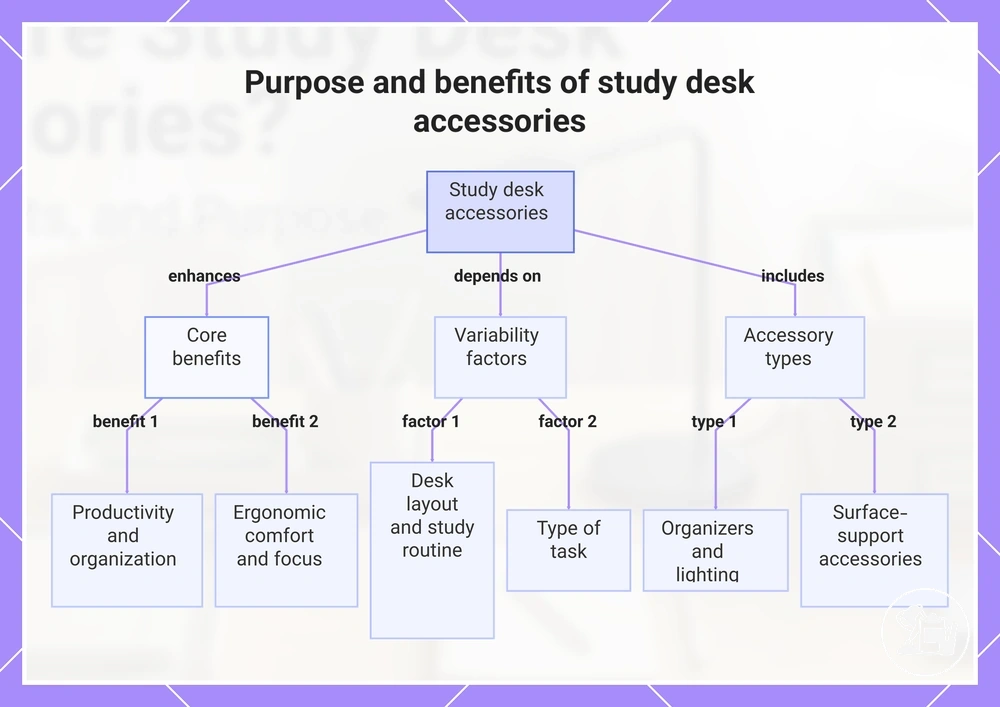
Study desk accessories are tools that enhance desk functionality, supporting productivity, ergonomic comfort, organization, and focus. They can help keep study materials accessible, reduce clutter, and create a workspace that promotes efficient and comfortable study habits.
The effect of each accessory can vary depending on desk layout, study routine, and type of task. Items such as organizers, lighting, and surface-support accessories contribute to a more streamlined workflow while maintaining ergonomic positioning. These benefits align with essential study desk accessory functions, providing clarity on how each accessory supports a practical and focused study environment :contentReference[oaicite:0]{index=0}.
This chart shows the core benefits of study desk accessories, the factors that influence their effectiveness, and the main types of accessories mentioned.
How study desk accessories enhance focus and productivity
Study desk accessories can improve focus and productivity by organizing study materials and reducing distractions in the workspace. Items such as organizers, task lighting, and cable management tools help maintain a clearer desk, which may support sustained attention and efficient workflow depending on the user’s study habits and desk setup.
Specific accessories contribute in different ways. An organizer can make supplies easier to locate, reducing time spent searching during study sessions. Proper lighting may enhance visibility for reading and writing tasks, while cable-management solutions help prevent clutter around devices and study materials. These impacts align with essential study desk accessory functions, showing how functional accessories may support a structured and productive study environment when used appropriately :contentReference[oaicite:0]{index=0}.
Examples of common study desk accessories
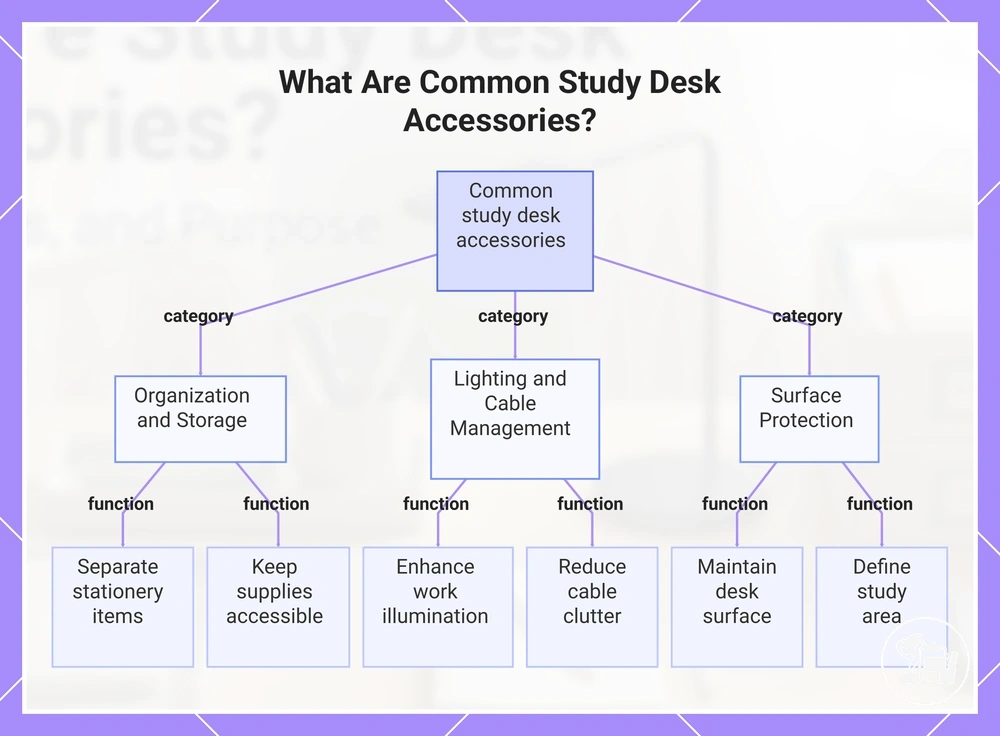
Typical study desk accessories are items that help organize, support, and improve the usability of a study workspace. They are commonly categorized into organization, storage, lighting, cable management, and surface protection, each contributing to a functional desk setup.
- Organizers → Attribute: material arrangement → Value: trays, pen holders, and compartmented boxes that help separate stationery and study materials.
- Storage items → Attribute: space management → Value: drawers, small shelves, and stackable boxes that keep frequently used items accessible.
- Lighting → Attribute: visibility support → Value: desk lamps and task lights that enhance illumination for reading, writing, or computer-based work.
- Cable management tools → Attribute: wire control → Value: clips, holders, and sleeves that help reduce clutter around electronic devices.
- Surface support accessories → Attribute: workspace protection → Value: mats or protective pads that maintain the desk surface while defining study areas.
These examples demonstrate common accessory types and their functional roles. For a detailed compilation and practical usage ideas, refer to the accessories checklist to combine accessories effectively :contentReference[oaicite:0]{index=0}.
This chart groups common study desk accessories into three main categories and shows the functional role of each.
How study desk accessories differ from furniture and decor
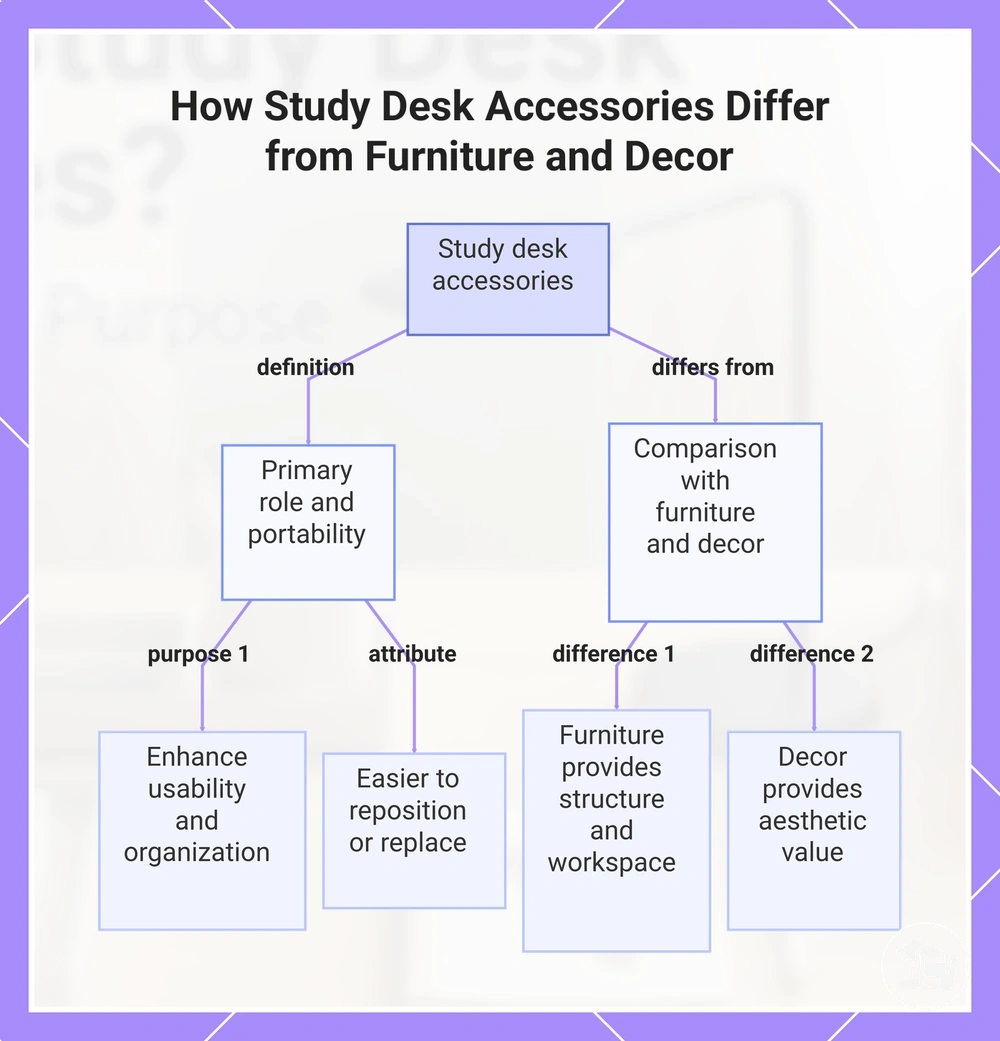
Study desk accessories differ from furniture and decor in that their primary role is to enhance the usability and organization of a study workspace rather than provide structural support or purely aesthetic value. Accessories are typically smaller, portable items designed to improve focus, accessibility, or workflow, whereas furniture forms the main workspace, and decor primarily affects visual appeal.
Examples include organizers, task lighting, and cable-management tools, which serve practical functions to support study activities. In contrast, desks, chairs, and shelving units create the physical environment, and decorative items contribute mainly to the look of the study area unless they also provide functional support. The distinction can also depend on portability and functional impact on study tasks, highlighting that accessories are usually easier to reposition or replace without altering the core workspace structure :contentReference[oaicite:0]{index=0}.
This chart compares the primary role and portability of study desk accessories with the structural and aesthetic roles of furniture and decor.