
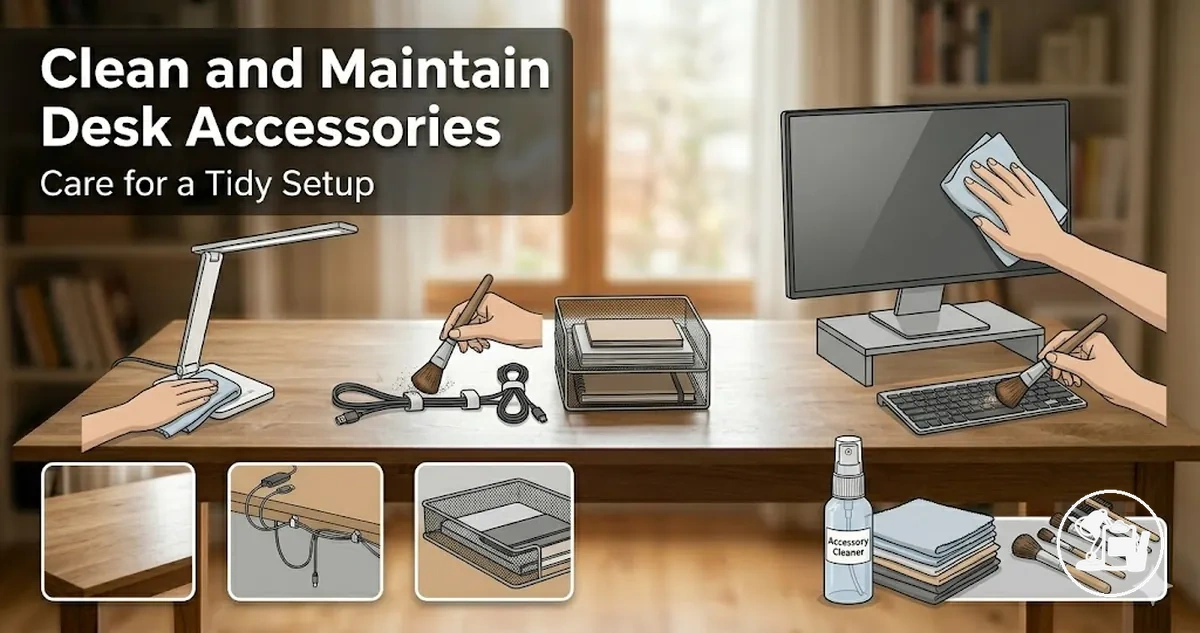
Study Desk Accessories: Cleaning and Maintenance
Study desk accessories are desk items and workspace organizers that need cleaning and maintenance based on accessory type, material, surface exposure, and daily use. Dust exposure can build around organizers, mats, cable-control items, and storage pieces, while moisture sensitivity may vary by material. Cleaning frequency depends on how often the desk is used, how visible the dust is, and whether the accessory surface can handle dry or damp care. Before choosing tools or methods, the safer starting point is to understand the material behind each accessory.
This page focuses on cleaning relevance, maintenance awareness, and material-based care, not on choosing or buying new accessories. For the broader category context, the study desk setup accessories hub explains how these items fit into a complete desk setup. Cleaning and maintenance should stay conditional because desk items may respond differently to dusting, wiping, moisture, and repeated handling.
Understanding Study Desk Accessories and Materials
Study desk accessories are organizers, mats, cable-control items, input devices, screens, and storage helpers that support functional desk setups. Each type of study desk accessory has specific material and surface characteristics that influence dust accumulation, moisture tolerance, and cleaning risk. Recognizing these properties helps determine the appropriate maintenance approach for each accessory.
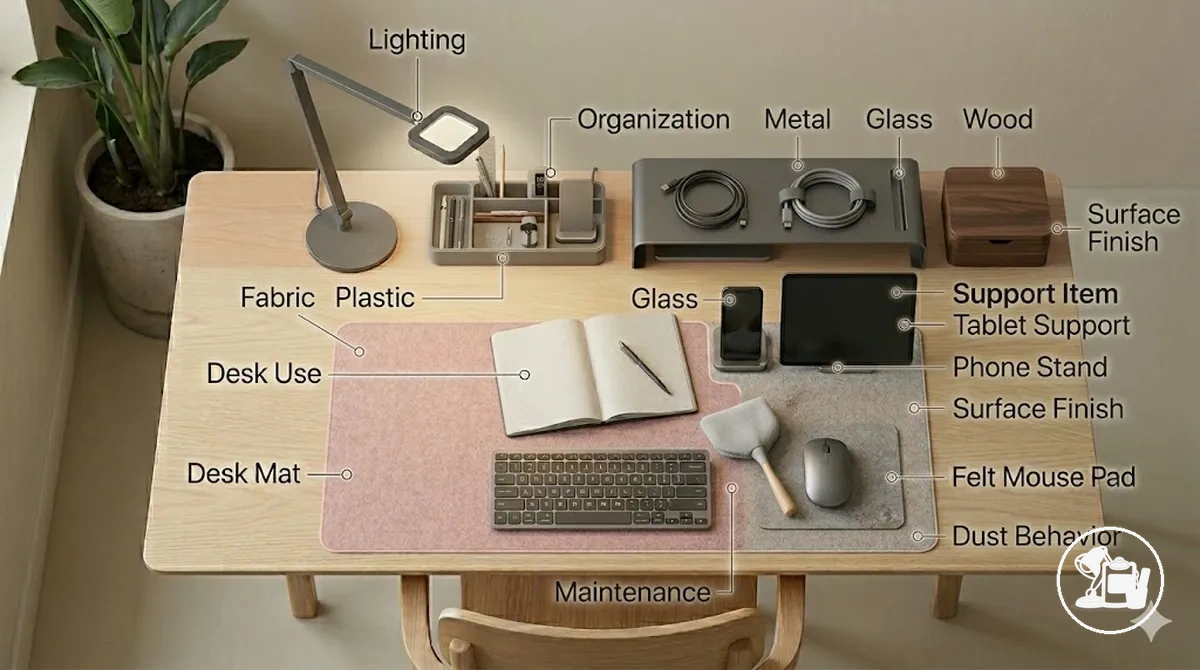
- Plastic organizers and cable-control items
- Fabric or felt desk mats
- Metal storage helpers and stands
- Glass or coated screen surfaces
- Wood or laminate desk items
The material and surface of each study desk accessory directly affect cleaning impact. Smooth surfaces typically release dust easily, while textured surfaces or fabrics may trap particles. Dust behavior, moisture sensitivity, and cleaning risk vary by material, so care methods may need adjustment depending on the accessory type. This section focuses solely on cleaning relevance and material considerations, rather than on selecting or buying new desk items.
Required Cleaning Tools and Supplies
Cleaning tools are essential for maintaining study desk accessories safely, as different materials and accumulated dust influence both effectiveness and surface integrity. Using appropriate cleaning tools reduces the risk of scratches, moisture damage, or residue buildup across various accessories.
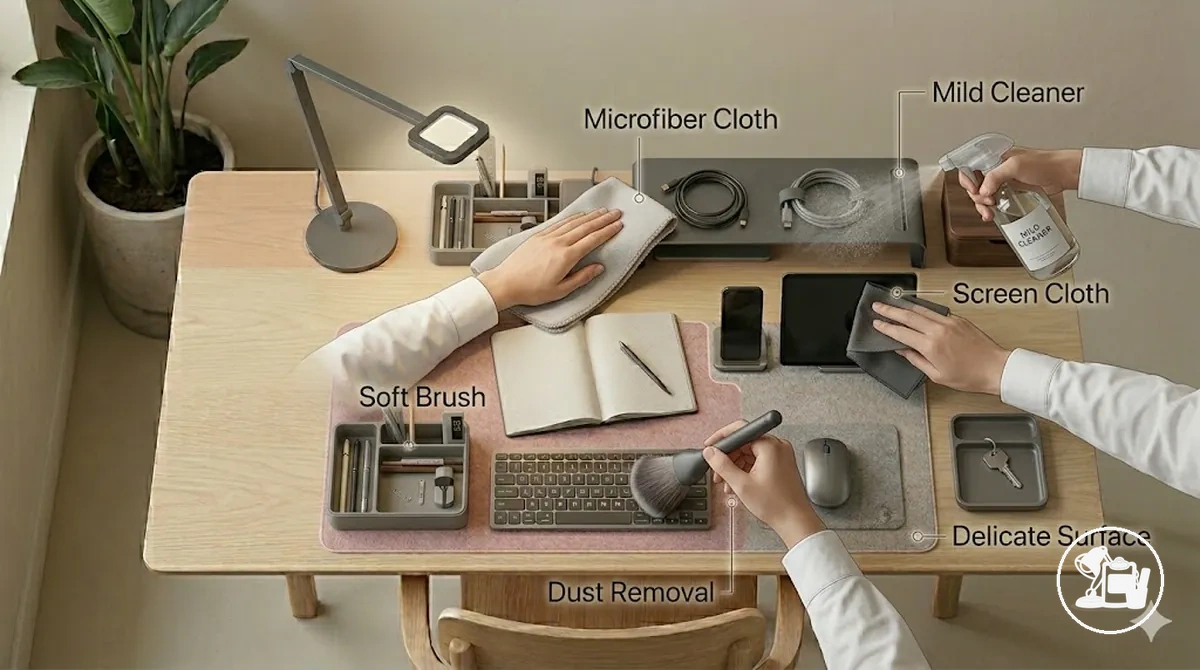
The following table illustrates common cleaning tools, the surfaces they suit, conditions for safe use, and potential effects or risks. This EAV (Entity-Attribute-Value) approach clarifies how each tool interacts with different materials. Using suitable methods helps protect clean organization accessories while maintaining functionality.
| Entity/Part | Attribute | Value/Condition | Effect/Risk/Decision |
|---|---|---|---|
| Microfiber cloth | Surface | Smooth, coated | Safe dust removal; minimizes scratch risk |
| Soft brush | Surface | Textured or grooved | Removes embedded dust; avoid excessive pressure |
| Mild cleaner | Material | Plastic, metal | Removes grime; avoid oversaturating surfaces |
| Screen-safe cloth | Surface | Glass, screen | Prevents streaks and scratches |
| Dust removal tool | Accessory | All surfaces | Light debris removal; check material compatibility |
| Dry cleaning method | Accessory | Delicate materials | Reduces moisture risk; may leave residue if abrasive |